
Blog
Ultimate Guide to Choosing the Best Type C to Lightning Cable

Type C to Lightning Cable India: What vmobiTec Recommends Before You Buy
If your last three gadget purchases came with a USB-C charger and your iPhone still has a Lightning port, you already know the problem. A type c to lightning cable is the only thing that bridges that gap, and in India the market is flooded with cables that either undercharge, trigger warning pop-ups, or stop working within weeks. At vmobiTec, we get asked about this cable category more than almost any other accessory question, so here’s what actually matters before you spend money on one.
What Is a Type C to Lightning Cable?
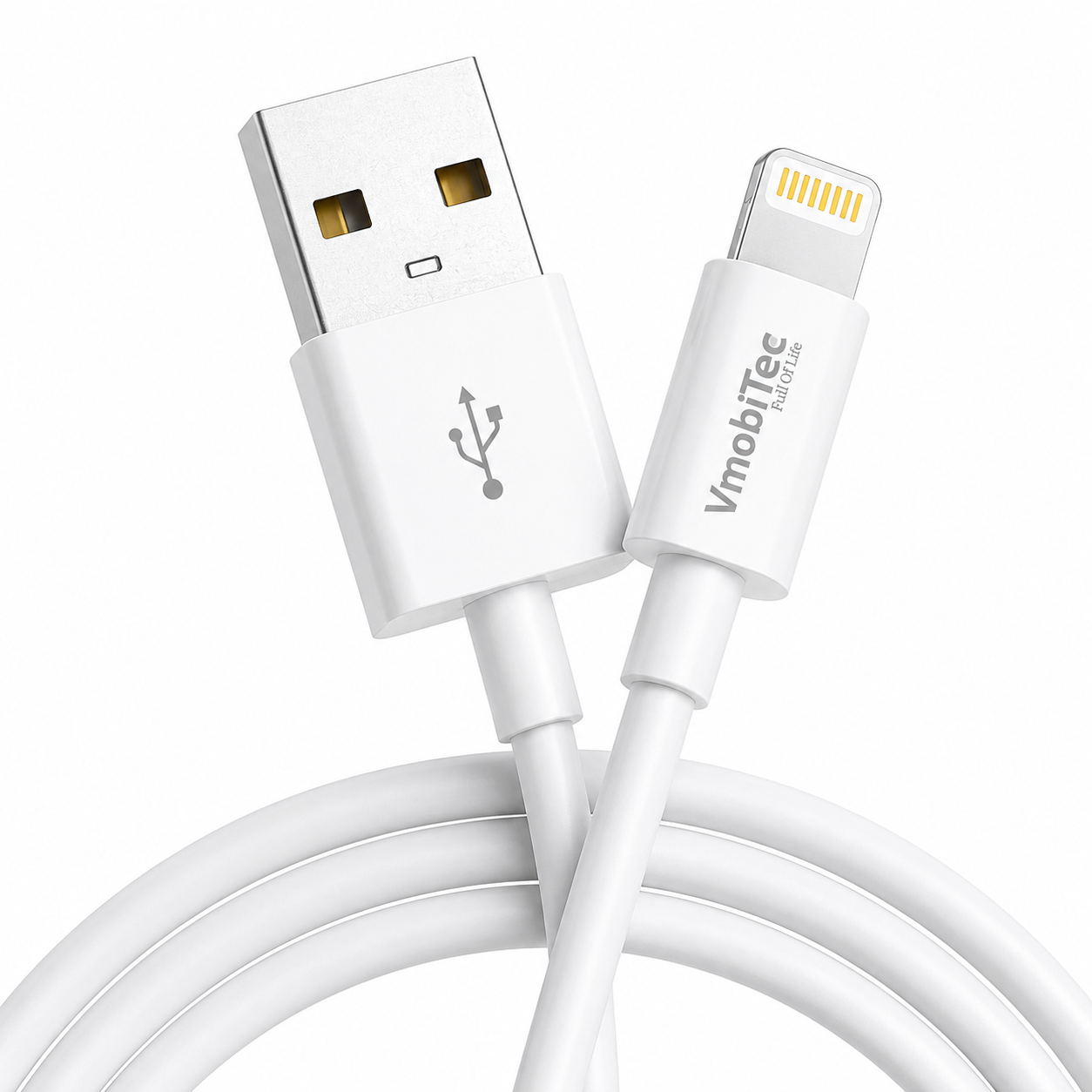
A type c to lightning cable is a charging and sync cable with a USB-C connector on one end and Apple’s Lightning connector on the other, designed to charge and connect iPhones and older iPads to USB-C power sources.
Apple shipped Lightning on every iPhone from the iPhone 5 through the iPhone 14 series. Over that same decade, the rest of the ecosystem around Indian buyers shifted hard toward USB-C — MacBooks, iPad Pro and iPad Air, most Android flagships, and nearly every power bank sold today. The result is a mismatch: your charger has a USB-C output, but your iPhone still wants Lightning. This cable is the fix, and nothing else does the job.
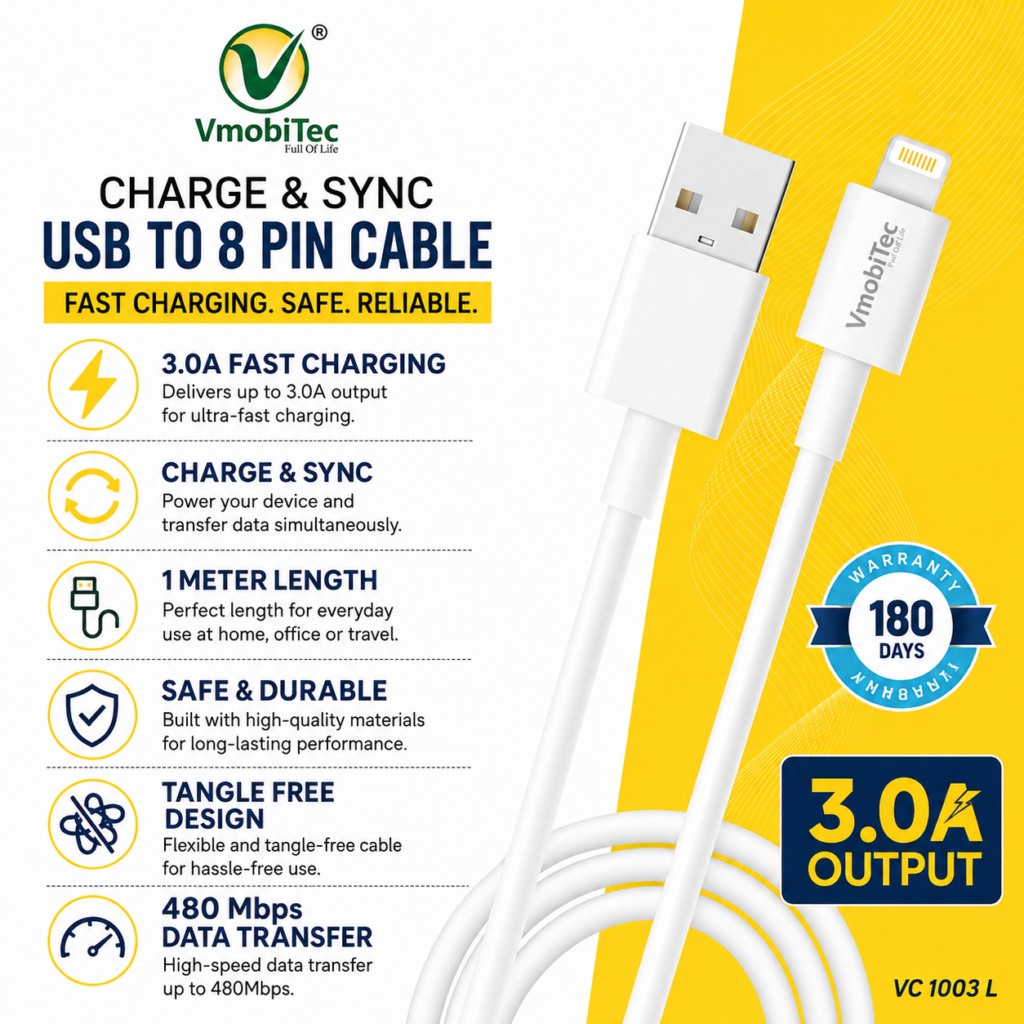
At vmobiTec, we consider this one of the few accessory categories where the “cheapest option” genuinely isn’t a safe default, because the failure modes aren’t just inconvenience — they range from slow charging to long-term port damage.
Why This Cable Matters More in India Than Elsewhere
Indian retail has moved to USB-C-first charging faster than many other markets, which is exactly why demand for this cable has spiked here.
Most phones, laptops, and power banks sold in India over the last two to three years ship with a USB-C cable and a USB-C-only adapter in the box — no USB-A option included. That’s a direct consequence of the broader industry shift toward USB-C as the default connector, a shift the EU accelerated globally with its common charger regulation. For an Indian household running one iPhone alongside Android phones, a Mi or realme power bank, and a Windows or MacBook laptop, the type c to lightning cable is what lets that iPhone use the exact same charger as everything else in the house.
Without it, iPhone owners in USB-C households are stuck plugging into an outlet directly or hunting for an old USB-A brick that increasingly doesn’t exist anymore.
The MFi Certification Problem (Read This Before You Buy)
MFi stands for “Made for iPhone,” Apple’s licensing program that certifies third-party cables contain the authentication chip required for safe, full-speed charging.
Uncertified type c to lightning cables — common on Indian marketplaces under ₹200 — frequently skip this chip entirely. The result is one of two outcomes: the iPhone throws a “This accessory may not be supported” warning, or the cable charges at a fraction of its advertised speed with no warning at all. In rarer cases, repeated use of a poorly built uncertified cable can stress the Lightning port itself.
vmobiTec’s take: don’t buy on the word “MFi” appearing in a listing title alone. Look for an actual certification ID printed on the packaging. If a seller can’t or won’t show one, treat that as a hard pass, not a maybe.
Type C to Lightning Cable vs Other Charging Cables
| Cable Type | Compatible Devices | Max Charging Speed | Common Use Case in India |
|---|---|---|---|
| Type C to Lightning Cable | iPhone 5–14 series, older iPads | Up to 20W–27W (MFi certified) | Charging iPhone from USB-C laptop or adapter |
| USB-C to USB-C | Android phones, MacBooks, iPad Pro/Air | Up to 100W+ | Modern Android and Apple devices |
| USB-A to Lightning | Older iPhones, legacy chargers | 5W–12W | Budget or older charging bricks |
| USB-A to USB-C | Android phones with old chargers | 15W–18W | Transitional setups |
A type c to lightning cable is the only cable on this list built specifically to let an iPhone draw fast charging from a USB-C brick — every other row either doesn’t fit an iPhone’s port or doesn’t unlock fast charging on it.
Key Benefits of Using a Type C to Lightning Cable
- Faster charging: Paired with a 20W+ USB-C adapter, this cable charges a compatible iPhone meaningfully faster than a legacy 5W USB-A brick.
- One charger for the whole house: Households mixing iPhones with Android phones, MacBooks, and USB-C power banks can standardize on a single adapter type.
- Data sync included: Most MFi-certified cables support file and photo transfer at USB 2.0 speeds alongside charging.
- Fewer cables to pack: Travelers carrying a USB-C-only laptop no longer need a separate charger just for their iPhone.
- Extends the life of older iPhones: As USB-A bricks disappear from Indian retail, this cable keeps iPhone 8–14 models charging without a hardware workaround.
How to Choose the Right Type C to Lightning Cable in India
- Check for a disclosed MFi certification number: Not just the letters “MFi” in a title — an actual ID you can look up.
- Match wattage to your adapter: A 27W-rated cable does nothing extra on a 5W charger; pair the cable’s rating with what your adapter actually outputs.
- Choose braided over plain PVC: Nylon braiding resists fraying at the strain-relief point, which is where cheap cables fail first.
- Buy from authorized listings: Favor Apple-authorized resellers or established brands over unbranded marketplace listings with no seller history.
- Pick the right length for your setup: 1m works for a desk; 2m suits bedside or car charging without stretching the cable.
Frequently Asked Questions About Type C to Lightning Cable India
Q: Does a type c to lightning cable work with the iPhone 15 or 16?
A: No. iPhone 15 and every later model switched to a USB-C port, so they use a standard USB-C to USB-C cable instead. This cable is only relevant for iPhone 5 through iPhone 14 and older Lightning-equipped iPads.
Q: Is a non-MFi certified cable safe to use in the meantime?
A: It will usually still charge the device, but without the authentication chip, iPhones may show a compatibility warning and cap charging speed well below what a certified cable delivers. Occasional use is low-risk; daily reliance isn’t recommended.
Q: What wattage should I buy for the fastest charging?
A: A 20W to 27W-rated cable paired with an 18W or higher USB-C PD adapter gets you the fastest speed a Lightning iPhone supports. Buying a higher-wattage cable than your adapter delivers won’t add any extra speed.
Q: Can I use this cable with an Android charger?
A: Yes. The cable itself doesn’t care which brand made the charger — it only needs a USB-C output capable of Power Delivery to charge at full speed.
Q: How do I spot a fake or uncertified cable before buying?
A: Watch for prices well under ₹200 claiming fast charging, generic packaging with no compliance markings, and listings that never mention an actual MFi certification ID. A missing warranty period is another red flag.
Q: Do iPads with a Lightning port need a different cable?
A: No. The same type c to lightning cable works across Lightning-equipped iPhones and iPads, since both use the identical port and charging protocol.
Final Verdict from vmobiTec
A type c to lightning cable has gone from a niche accessory to a near-essential purchase for any Indian household mixing iPhones with USB-C-first devices. Stick to MFi-certified options, match the wattage to your adapter, and favor braided builds — that combination avoids the two complaints we hear most often: slow charging and cables fraying within months. If you’re setting up a new charging station at home, pair this cable with a compact 20W+ USB-C adapter and you’re covered for years, not months.