Blog

Multi-Port Charger for Charging Two Phones at Once: Complete Guide
Charging two smartphones from one wall socket is convenient, but not every charger distributes power in the same way. A multi-port charger for charging two phones at once provides multiple charging outputs from a single adapter, allowing two smartphones to charge simultaneously.
The right charger should match the power requirements of both phones, available ports, charging protocols, cable specifications, and simultaneous output. This guide explains dual-port charging, 45W and 65W chargers, GaN technology, USB-C and USB-A configurations, power sharing, safety, and what to check before buying.
What Is a Multi-Port Charger for Charging Two Phones at Once?
A multi-port charger for charging two phones at once is a power adapter equipped with two or more charging ports that can supply power to multiple devices simultaneously. Depending on the model, these ports may include USB-C, USB-A, or both.
A dual-port charger allows users to connect two phones to one wall outlet instead of using separate charging adapters. The setup is useful for homes, offices, travel, shared workspaces, and bedside charging.
The number of ports isn’t the only specification that matters. Total wattage and the charger’s power-distribution system determine how much power each connected phone can receive.
How Does Dual-Port Charging Work?
When two devices are connected, the charger manages the available power according to its internal design and the charging standards supported by each device.
For example, a 65W charger may provide one output when only one device is connected and a different power combination when both ports are being used. The actual charging rate also depends on the phone and cable.
A 65W rating therefore doesn’t mean every connected phone receives 65W. The maximum output and simultaneous output profile should always be checked in the manufacturer’s specifications.
Why Use a Multi-Port Charger for Charging Two Phones at Once?
A multi-port charger for charging two phones at once can reduce the number of adapters needed at home, work, or while travelling. Instead of occupying two electrical sockets with separate chargers, users can connect both phones to one adapter.
This setup is particularly useful for couples, families, office users, students, and travellers who regularly need to charge more than one smartphone.
One Adapter for Two Smartphones
A dual port charger for two phones can power two smartphones from one wall outlet. Each phone still controls its own charging requirements through communication between the device and charger.
A phone supporting 25W charging, for example, won’t automatically charge at 45W just because the adapter has a 45W rating. Device compatibility remains essential.
Reduced Adapter Clutter
Using one adapter can make a desk or bedside charging area more organised. It can also reduce the number of chargers carried in a travel bag.
For modern smartphones, a dual USB-C charger can be particularly convenient because many newer devices use USB-C charging cables.
Dual Port Fast Charger: 45W vs 65W
A dual port fast charger should be selected according to the charging requirements of the connected devices. A 45W model can be suitable for two smartphones, while a 65W charger provides greater overall power capacity.
| Charger Type | Typical Use | Main Advantage | Key Consideration |
|---|---|---|---|
| 20W–30W dual port | Basic smartphone charging | Compact and affordable | Lower total output |
| 45W dual port | Two smartphones | Balance of size and power | Output may be shared |
| 65W dual port | Phones and larger devices | Higher power capacity | Check power distribution |
| GaN dual port | Travel and multiple devices | Compact high-power design | Protocol compatibility |
| USB-C + USB-A | Mixed devices | Flexible cable compatibility | Port speeds can differ |
The correct choice depends on the devices rather than the highest wattage number. A 45W model may be enough for two smartphones, while a 65W model may offer more flexibility for tablets and other compatible devices.
45W Dual Port Fast Charger
A 45W dual port fast charger is a practical middle-ground option for users who want to charge two smartphones without moving to a higher-power adapter.
However, users should check the simultaneous output specification. Some chargers can provide their maximum output only when one port is being used.
65W Dual Port Fast Charger
A 65W dual port fast charger provides greater total power capacity. Depending on its design, it may also be suitable for tablets, power banks, earbuds, and other USB-powered electronics.
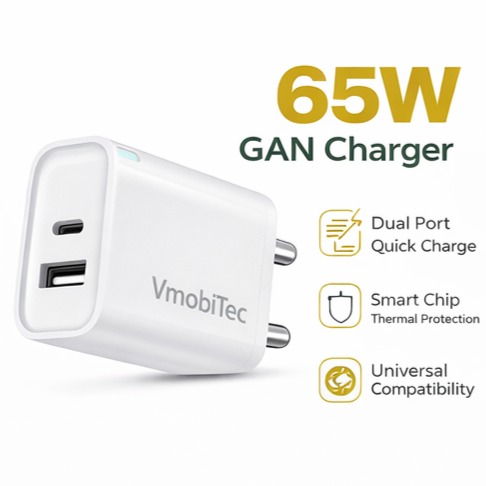
The important specification is the output combination available when both ports are occupied. The manufacturer’s technical table should clearly show this information.
GaN Charger for Two Phones: Is It Better?
A GaN charger for two phones uses gallium nitride semiconductor technology to help achieve compact and efficient charger designs. GaN technology is commonly used in modern high-output adapters.
A GaN model can be useful for people who want high charging capacity without carrying a large traditional adapter. However, GaN technology alone doesn’t guarantee faster charging.
Actual performance still depends on USB Power Delivery, Quick Charge or other supported protocols, the phone, and the charging cable.
Benefits of GaN Technology
- Compact design: High-output chargers can be built in smaller form factors.
- Efficient operation: Modern GaN chargers are designed for efficient power conversion.
- Travel convenience: Smaller chargers can save space in travel bags.
- High-power options: GaN is commonly used in 45W, 65W and higher-output chargers.
- Multi-device support: Many GaN models include multiple USB-C and USB-A ports.
For users comparing a multi-port charger for charging two phones at once, GaN is worth considering when portability and higher power capacity are priorities.
USB-C USB-A Dual Port Charger vs Dual USB-C
A USB-C USB-A dual port charger combines the newer USB-C connector with a USB-A port. This configuration is useful when users have a mixture of newer smartphones and older charging accessories.
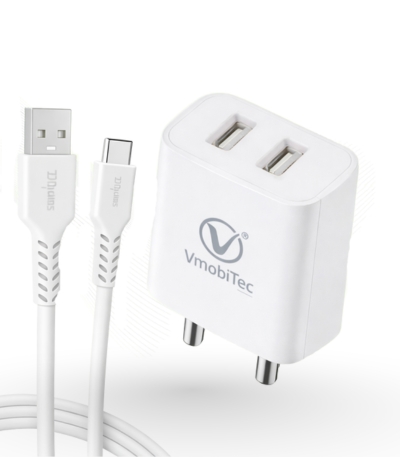
A dual USB-C charger can be more convenient when both phones use USB-C-to-USB-C cables. USB-C also supports modern standards such as USB Power Delivery on compatible equipment.
| Configuration | Best For | Main Benefit |
|---|---|---|
| USB-C + USB-A | Mixed devices | Supports different cable types |
| Dual USB-C | Modern smartphones | Convenient for USB-C cables |
| Dual USB-A | Older accessories | Works with USB-A cables |
| Multiple USB-C | Phones and tablets | Flexible modern setup |
Users with newer smartphones may prefer dual USB-C. Users with mixed accessories may find USB-C plus USB-A more practical.
How Much Wattage Do Two Phones Need?
The power required for two phones depends on the maximum charging capability of each device. A charger doesn’t force a phone to accept more power than the device is designed to support.
For example, two smartphones with moderate fast-charging requirements may work well with a 45W adapter. A 65W model provides more capacity when one or both devices require higher power.
Understanding Power Sharing
Power sharing is a critical specification when selecting a charger for charging two phones simultaneously.
A charger advertised as 65W may provide 65W through one port but distribute the available power differently when two devices are connected.
For this reason, buyers should examine both single-port and multi-port output ratings. This gives a more accurate picture of real-world charging performance.
What Should You Look for in a Charger for Multiple Devices?
A charger for multiple devices should be evaluated based on output power, port configuration, charging protocols, safety features, cable compatibility, and portability.
1. Total Output Power
Check both the maximum wattage and simultaneous output. A higher number is useful only when connected devices can actually use the available power.
2. USB Power Delivery
USB Power Delivery, commonly called USB PD, is a charging standard used by compatible USB-C devices. It enables compatible chargers and devices to negotiate an appropriate power level.
USB-IF maintains specifications for USB technologies, so buyers should check the actual PD support listed for a charger rather than assuming all USB-C ports have identical capabilities.
3. Port Configuration
Choose dual USB-C if your phones use USB-C charging cables. Choose USB-C plus USB-A if you need compatibility with different cable types.
4. Safety Protection
Reputable chargers commonly include protection against conditions such as over-current, over-voltage, over-temperature, and short circuits.
5. Cable Compatibility
The charger and phone can only deliver suitable charging performance when the cable is also compatible with the required power and charging technology.
Benefits of a Multi-Port Charger for Charging Two Phones at Once
A multi-port charger for charging two phones at once provides several practical benefits for everyday charging.
- Simultaneous charging: Two smartphones can charge from one wall adapter.
- Fewer adapters: One charger can reduce the need to carry separate adapters.
- Better organisation: Fewer adapters can simplify desks and bedside tables.
- Flexible connectivity: USB-C and USB-A combinations support different cables.
- Higher power options: 45W and 65W models provide additional capacity for compatible devices.
- Travel convenience: One multi-port adapter can simplify charging while travelling.
- Multiple-device support: Some models can also power earbuds, watches, power banks, and tablets.
For households where two people regularly charge smartphones at the same time, a multi-port setup can be more convenient than two individual adapters.
How to Choose the Right Multi-Port Charger for Charging Two Phones at Once
Choosing a dual port charger for two phones is easier when you start with the phones and cables you already use.
Step 1: Check Both Phones
Find the maximum charging power supported by both smartphones. Manufacturer specifications or official support pages are the best sources for this information.
Step 2: Select the Port Configuration
Choose dual USB-C if both phones use USB-C cables. Choose USB-C plus USB-A if you need compatibility with older cables.
Step 3: Check Simultaneous Output
Don’t rely only on the advertised maximum wattage. Check how much power the charger provides when both ports are occupied.
Step 4: Check Charging Standards
Look for USB Power Delivery, Quick Charge, or other protocols supported by your devices.
Step 5: Consider Size
A compact GaN charger can be useful for travel. For a permanent desk setup, port configuration and output may matter more than physical dimensions.
Step 6: Match the Cables
Use cables capable of handling the required charging power and compatible charging standards. A poor-quality or unsuitable cable can limit charging performance.
VmobiTec Dual Port Charger Options for Everyday Charging
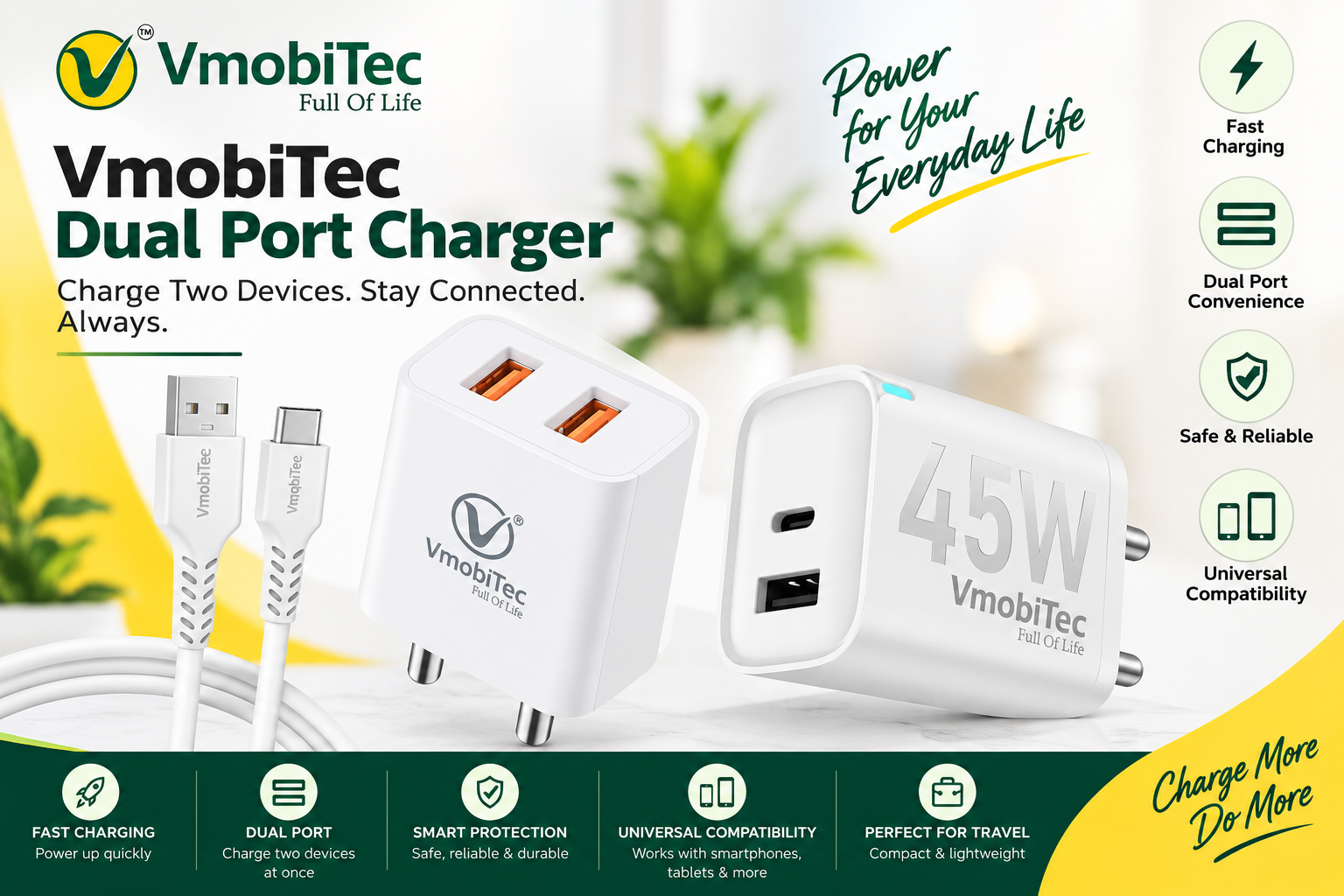
A VmobiTec dual port charger can be considered by users looking for a multi-device charging solution. The correct model should be selected according to device compatibility, port configuration, wattage, and power distribution.
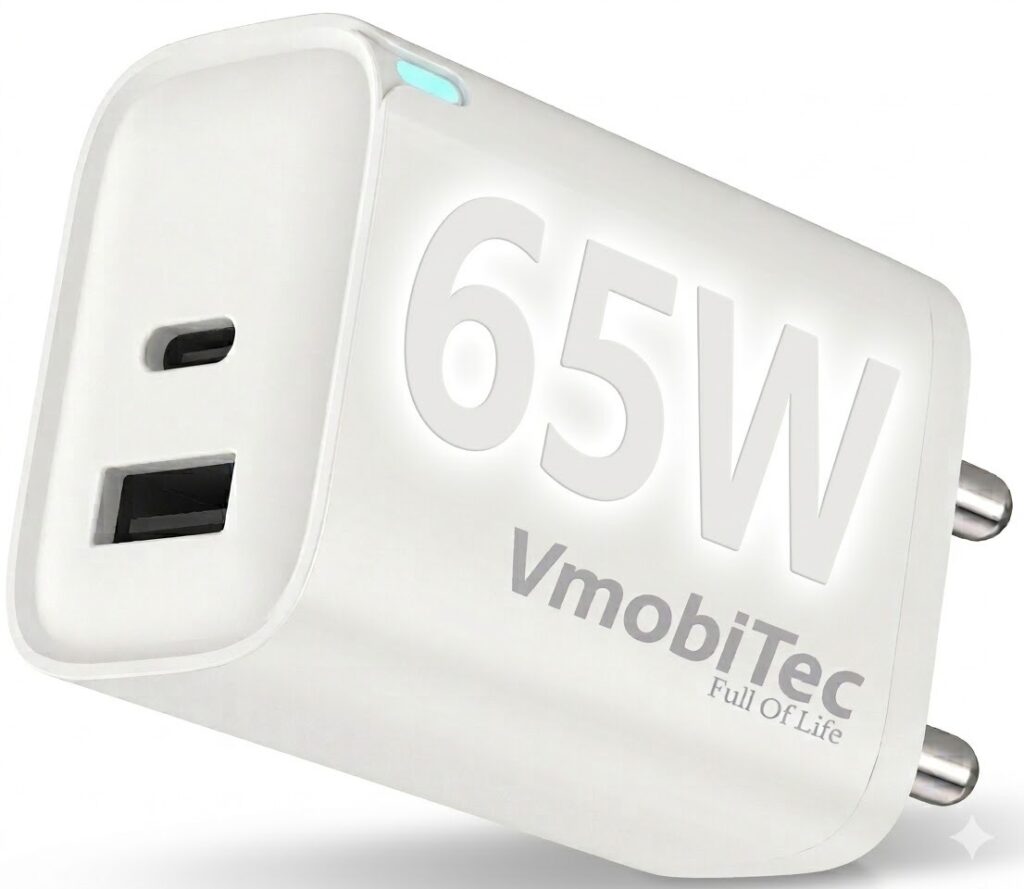
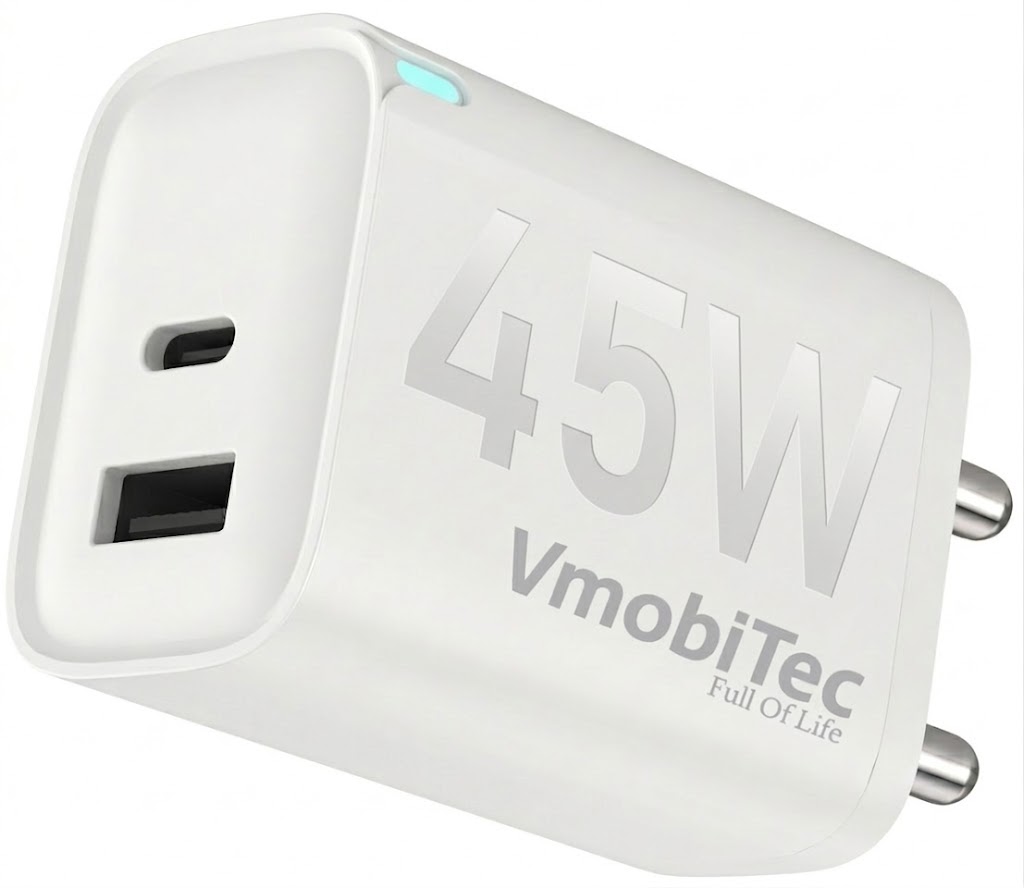
For users comparing a VmobiTec 45W GaN charger with a VmobiTec 65W GaN charger, the important difference isn’t simply the wattage number. Buyers should compare the output available when both ports are used.
A VmobiTec fast charger may be suitable for compatible smartphones and accessories where fast charging support is available.
Users searching specifically for a VmobiTec charger for two phones should also check the product specifications for simultaneous output, supported charging protocols, connector types, and recommended cable requirements.
A multi-port charger for charging two phones at once should always be selected according to the actual requirements of the connected devices rather than maximum wattage alone.
Common Mistakes When Buying a Dual Port Charger
Several mistakes can reduce the practical benefits of a multi-port charging setup.
Choosing Only by Wattage
A 65W charger isn’t automatically the right choice for every user. Two smartphones with moderate charging requirements may work perfectly well with a 45W model.
Ignoring Power Distribution
Always check simultaneous output. Maximum single-port output and multi-port output can be different.
Using Unsuitable Cables
A high-power charger cannot deliver its intended charging performance when paired with an unsuitable cable.
Assuming Every USB-C Port Works the Same
USB-C identifies a connector type rather than one universal charging capability. Different USB-C implementations can support different power and data features.
Frequently Asked Questions About Multi-Port Charger for Charging Two Phones at Once
Q: Can a multi-port charger for charging two phones at once charge both phones simultaneously?
A: Yes. A multi-port charger for charging two phones at once can charge two smartphones simultaneously when its ports support concurrent output. Actual charging speed depends on the charger’s power-sharing design, the phones’ charging requirements, supported protocols, and cable capability.
Q: Is a 45W dual port fast charger enough for two phones?
A: A 45W dual port fast charger can be enough for two smartphones with moderate charging requirements. The key factor is simultaneous output. Some 45W chargers provide their maximum rating through one port, while available power changes when both ports are connected.
Q: Is a 65W dual port fast charger better for two phones?
A: A 65W dual port fast charger provides greater total power capacity than a 45W model, but higher wattage doesn’t automatically mean faster charging. The phones must support the available power, and the charger must provide suitable output when both ports are active.
Q: Can I use a GaN charger for two phones?
A: Yes. A GaN charger for two phones can provide a compact multi-device charging solution. GaN technology allows manufacturers to build relatively small high-power adapters, but actual charging performance still depends on protocols, output distribution, phones, and compatible cables.
Q: Should I choose USB-C or USB-C and USB-A?
A: Choose dual USB-C when both phones and your other devices primarily use USB-C cables. A USB-C USB-A dual port charger is more flexible when you use both newer USB-C devices and accessories that still rely on USB-A cables.
Q: Can one charger charge two phones without reducing charging speed?
A: It depends on the charger. Some multi-port models maintain strong output across both ports, while others redistribute available power when two devices are connected. Check the manufacturer’s simultaneous-output specifications to understand how the charger behaves under two-device loads.
Q: What should I check before buying a multi-port charger for charging two phones at once?
A: Check the charger’s total wattage, simultaneous output, USB-C or USB-A port configuration, supported charging protocols, safety protections, and cable compatibility. The charger should match the actual charging requirements of both phones rather than simply having the highest advertised wattage.
Q: Is a dual port charger safe for two phones?
A: A reputable dual-port charger can safely charge compatible devices when used according to its specifications. Look for protection against over-current, over-voltage, overheating, and short circuits. Suitable charging cables and undamaged electrical connections are also important for safe everyday charging.
Final Takeaway from Multi-Port Charger for Charging Two Phones at Once
A multi-port charger for charging two phones at once is a practical solution for users who regularly charge multiple smartphones from one wall outlet. The most relevant factors are power distribution, charging protocols, port configuration, cable compatibility, safety protection, and portability.
A 45W model can be suitable for many two-phone setups, while a 65W charger offers additional power capacity for compatible devices. GaN technology can also provide a compact design for users who prioritise portability.
Before choosing a VmobiTec charger for two phones, compare the charger’s simultaneous output with the actual charging requirements of both smartphones. Selecting based on compatibility rather than headline wattage helps create a more reliable charging setup.