Blog

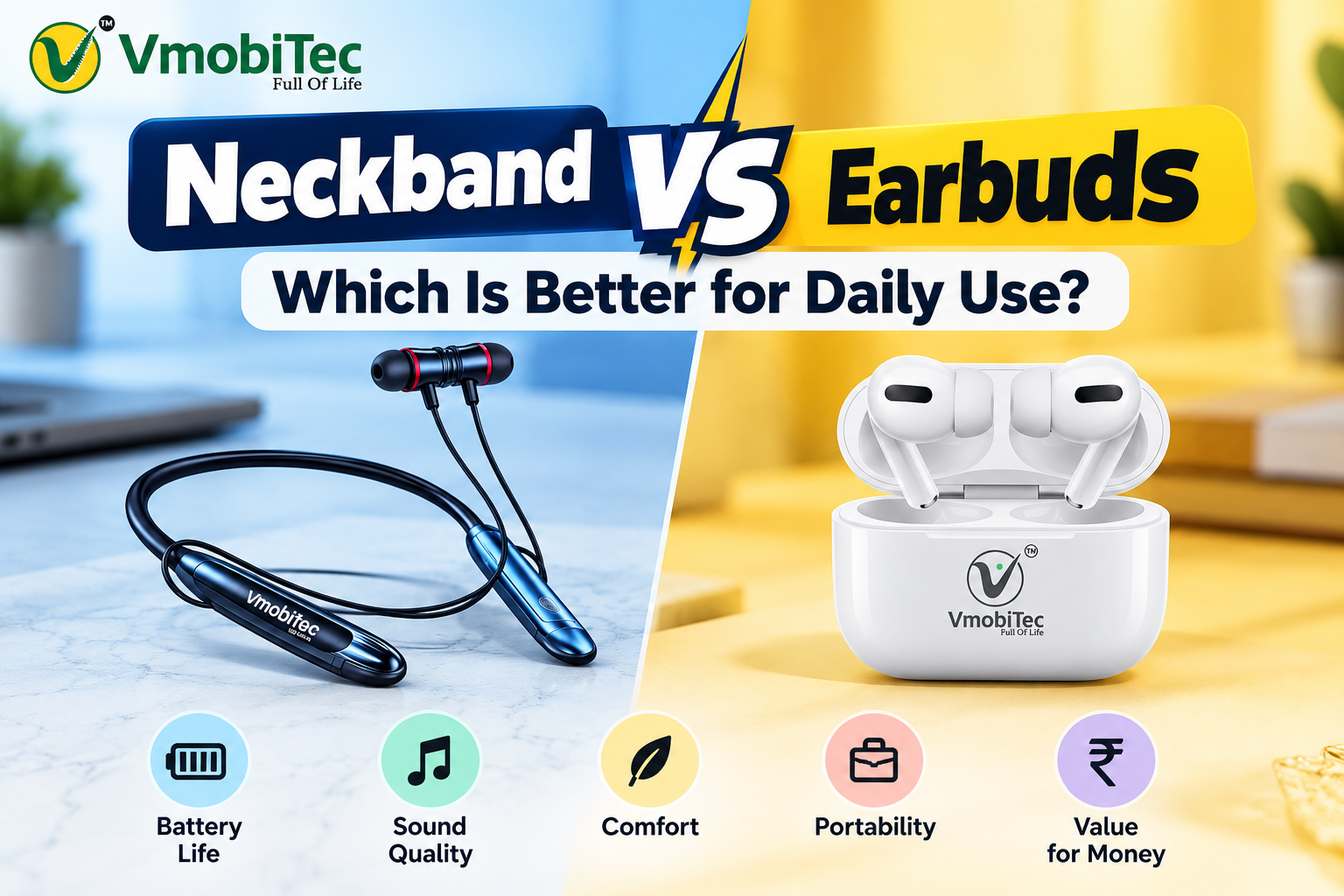
Neckband vs Earbuds: Which Is Better for Daily Use?
Neckband vs earbuds for daily use depends on comfort, battery life, call quality, portability, and how you use them. Neckbands can be practical for longer listening sessions and users who prefer a secure design, while true wireless earbuds are compact and convenient for commuting, workouts, calls, and everyday use. Choose based on your comfort, usage habits, and required features.
Choosing between a neckband and true wireless earbuds comes down to how you listen, travel, work and take calls. The question “neckband vs earbuds which is better for daily use” is especially relevant for Indian smartphone users who want reliable audio without spending unnecessarily.
Neckbands and earbuds can both deliver good sound, Bluetooth connectivity and hands-free calling, but their designs solve different everyday problems. Neckbands keep the two earpieces connected around your neck, while true wireless earbuds operate independently without a connecting cable.
For office calls, commuting, workouts, gaming and casual music, the better choice can vary. The right decision depends on comfort, battery life, call quality, portability, fit, durability and budget.
Neckband vs Earbuds: Which Is Better for Daily Use ?
Earbuds are generally better for users who prioritize portability and a completely wireless design, while neckbands can be more practical for users who value longer wear time, easier handling and secure storage around the neck.
A neckband connects both earbuds with a flexible band that rests around your neck. The design makes the earphones harder to misplace and allows you to remove the earbuds temporarily without putting them in a case.
True wireless earbuds, commonly called TWS earbuds, have no physical connection between the left and right earpieces. They usually come with a charging case that stores and recharges the earbuds.
In my experience, daily-use buyers should start with comfort and routine rather than specifications alone. A feature that sounds impressive on a product page doesn’t help if the device doesn’t fit comfortably for several hours.
What Is a Neckband?
A neckband is a Bluetooth audio device with two earbuds connected by a flexible cable or band worn around the neck.
The battery, controls and other electronics may be distributed along the neckband. Many models include inline buttons or controls for music, calls and voice assistants.
Neckbands are particularly convenient for commuters, office users and people who frequently take one earbud out during conversations.
What Are True Wireless Earbuds?
True wireless earbuds are two independent Bluetooth earbuds that connect wirelessly to a smartphone or another compatible device.
The earbuds are normally stored in a compact charging case. The case provides additional battery capacity and protects the earbuds when they aren’t being used.
TWS earbuds are popular because they combine small size, portability and a cable-free listening experience.
Wireless Earbuds for Everyday Use
Wireless earbuds for everyday use are designed to handle common activities such as music streaming, phone calls, commuting, work, study, and casual workouts. When choosing a pair, consider comfort, battery life, Bluetooth connectivity, microphone quality, fit, and durability rather than focusing on a single feature. A well-fitted pair can provide convenient, cable-free listening throughout the day, making wireless earbuds a practical choice for modern smartphone users.
Neckband vs Earbuds for Comfort and Daily Wearing
Comfort depends more on ear fit, weight and design than on whether a product is a neckband or earbuds.
Neckbands distribute some components around the user’s neck, which can make the earbuds themselves feel lighter. The connecting band also reduces the chance of dropping an earbud when removing it.
Earbuds eliminate the neckband completely, which some users find more comfortable during long periods of movement. However, poorly fitted earbuds can create pressure inside the ear or become loose during exercise.
Neckband Comfort
A neckband can be comfortable for long listening sessions because the connecting band provides additional stability.
The design is also convenient when switching between listening and conversation. You can remove the earbuds and let them rest around your neck instead of putting them somewhere else.
The main drawback is that some users don’t like having a band around their neck, particularly during exercise or sleep.
Earbud Comfort
True wireless earbuds offer a lightweight, cable-free experience. Their small design makes them easy to carry and use throughout the day.
Fit is critical. Different ear shapes require different ear-tip sizes, and an unsuitable fit can affect comfort, bass response and passive noise isolation.
For long daily sessions, look for lightweight earbuds with appropriately sized ear tips rather than choosing based only on battery or audio specifications.
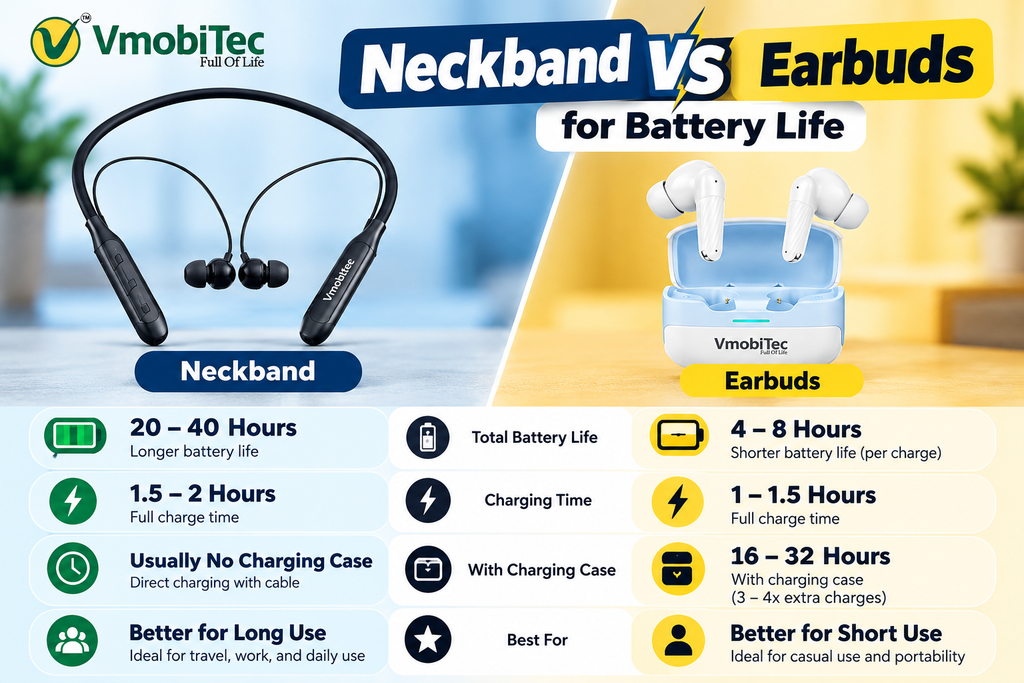
Neckband vs Earbuds for Battery Life
Neckbands often provide strong continuous playback, while earbuds rely on both individual earbud batteries and the charging case for extended use.
The actual battery life varies significantly between products, so buyers should check the manufacturer’s stated playback figures rather than assuming one category always lasts longer.
Neckbands can accommodate a larger battery because the electronics aren’t restricted to two tiny earbuds.
TWS earbuds have smaller individual batteries, but the charging case provides multiple additional charging cycles.
| Battery Factor | Neckband | True Wireless Earbuds |
|---|---|---|
| Earbud battery size | Generally larger system capacity | Smaller individual batteries |
| Charging case | Usually not required | Usually included |
| Continuous listening | Often strong | Varies by model |
| Extra charging | Usually through cable | Charging case provides extra power |
| Convenience | Simple charging | Case doubles as storage |
| Best for | Long listening sessions | Portable everyday use |
For users who regularly forget to charge devices, a neckband can be convenient because there is no separate charging case to manage.
Neckband vs Earbuds for Sound Quality
Neither neckbands nor earbuds automatically provide better sound quality; audio performance depends on the driver, tuning, codec, fit and overall product design.
A well-designed neckband can sound better than a poorly tuned pair of TWS earbuds, and the reverse can also be true.
When comparing products, look beyond marketing terms such as “deep bass” or “HD sound.” Check the actual specifications and, where possible, user feedback about vocals, bass balance, clarity and distortion.
Factors That Affect Sound Quality
- Driver design: Determines much of the earphone’s sound reproduction.
- Ear-tip fit: A proper seal can improve bass and passive isolation.
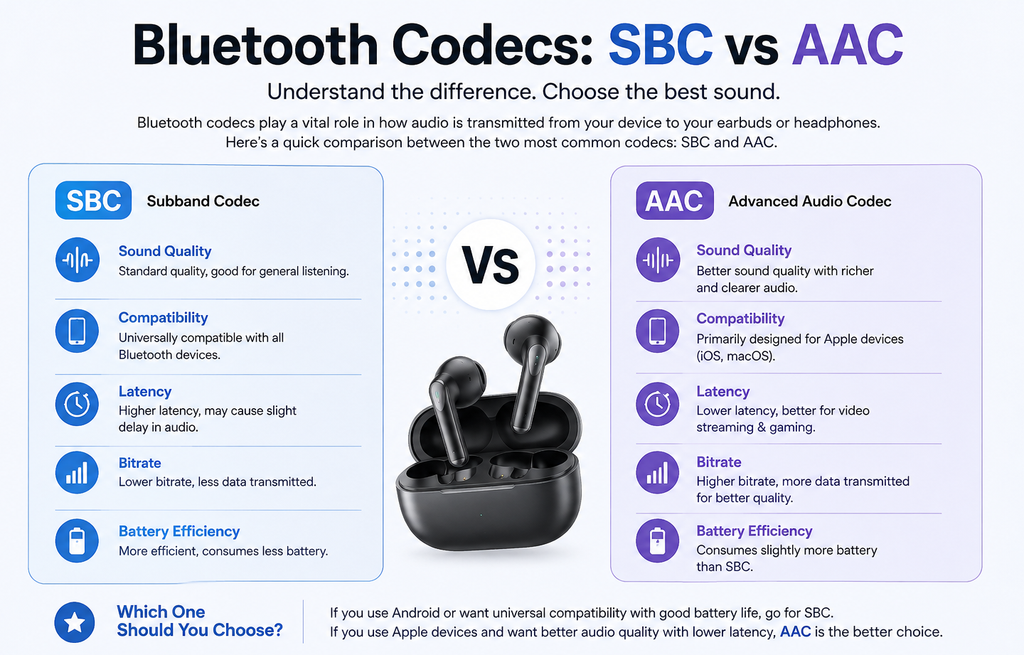
- Bluetooth codec: Compatible codecs can affect wireless audio performance.
- Audio tuning: Bass-heavy, balanced and vocal-focused products suit different listeners.
- Noise cancellation: ANC can reduce surrounding noise on supported models.
- Earbud placement: Poor fit can make even good hardware sound weaker.
For most daily users, a comfortable fit and sensible tuning matter more than chasing the largest specification number.
Neckband vs Earbuds for Phone Calls
Both neckbands and earbuds can work well for calls, but microphone placement and noise-processing technology matter more than the product category.
People who use headphones for frequent work calls should pay attention to microphone quality, environmental noise reduction and voice clarity.
Technologies such as ENC can help improve voice pickup in noisy environments by processing microphone input. ANC serves a different purpose by reducing certain environmental sounds for the listener.
A neckband’s microphone may be positioned closer to the user’s mouth depending on the design. TWS earbuds place microphones directly on the earbuds, often using multiple microphones for voice processing.
Best Choice for Office Calls
A neckband can be practical for professionals who take repeated calls throughout the day and prefer a device that’s easy to remove and wear again.
TWS earbuds can be more discreet and portable, particularly for users moving between a desk, meeting room and commute.
For either option, check real-world call-quality feedback before buying.
Neckband vs Earbuds for Portability
True wireless earbuds have the advantage in portability because the earbuds and charging case occupy very little space.
A TWS case can usually fit into a pocket, small bag or laptop compartment. The absence of a neck cable also makes earbuds easier to store.
Neckbands are still portable, but the flexible band takes up more physical space and can be less convenient to pack.
For students and professionals who carry multiple devices throughout the day, compact TWS earbuds can be especially convenient.
Neckband vs Earbuds for Workouts
For workouts, the better choice depends on movement, fit and personal preference rather than the form factor alone.
Neckbands can provide a secure connection between both earbuds, making them easier to handle during exercise. If an earbud becomes loose, the connecting band prevents it from falling completely away.
TWS earbuds remove the neckband and can feel less restrictive during running, cycling or gym exercises.
Water and sweat resistance should also be checked. An IP rating can provide useful information, but the exact product instructions should always be followed.
For Gym Users
A lightweight neckband can be practical for gym sessions where secure handling matters.
TWS earbuds may be preferable when you want maximum freedom of movement and don’t like cables around your neck.
For Running
Fit becomes the most important factor. Earbuds that loosen during running can be frustrating regardless of their battery life or sound quality.
Look for secure ear tips, wings or an ergonomic design if you’re buying specifically for running.
Neckband vs Earbuds for Travel and Commuting
Neckbands are convenient for frequent commuters, while earbuds are easier to store and carry during travel.
A neckband can hang around your neck between listening sessions. That makes it easy to pause music, talk to someone and resume listening without searching for a charging case.
TWS earbuds are better suited to minimal packing. Their charging case keeps the earbuds together and adds protection when they’re stored in a backpack or pocket.
For air travel and long journeys, battery life, comfort and passive or active noise isolation may matter more than the basic form factor.
Neckband vs Earbuds: Price and Value in India
Neckbands often provide strong value for buyers who want useful features at a moderate price, while earbuds cover a wider range from budget models to premium TWS products.
The Indian market has options across almost every price segment. Buyers can find basic Bluetooth neckbands and TWS earbuds at accessible prices, while premium products add features such as ANC, transparency modes, advanced codecs and multipoint connectivity.
Price shouldn’t be the only deciding factor. A slightly more expensive product can offer better comfort, microphone performance or battery life, which may matter more for daily use.
For budget-conscious buyers, compare the features you will actually use rather than paying for specifications that don’t affect your routine.
Neckband vs Earbuds Comparison Table
The key difference is simple: neckbands prioritize easy handling and a connected design, while true wireless earbuds prioritize portability and complete wireless freedom.
| Feature | Neckband | True Wireless Earbuds |
|---|---|---|
| Design | Two earbuds connected by neckband | Two independent earbuds |
| Portability | Good | Excellent |
| Storage | Usually no charging case | Charging case |
| Comfort | Good for many users | Depends heavily on ear fit |
| Cable-free experience | No | Yes |
| Risk of losing one earbud | Lower | Higher |
| Continuous listening | Often strong | Model-dependent |
| Charging convenience | Usually simple | Case-based charging |
| Calls | Good on quality models | Good on quality models |
| Exercise | Good | Good with secure fit |
| Travel | Convenient | Highly portable |
| Style | Practical | Minimal and discreet |
| Best suited for | Commuters, office users, long sessions | Portable everyday listening |
The comparison shows why there isn’t one universal winner. The better format depends on the user’s priorities.
Benefits of Choosing a Neckband for Daily Use
A neckband is a strong everyday option when easy handling, stability and long listening sessions are priorities.
- Easy to handle: The connected earbuds are less likely to get separated or misplaced.
- Convenient between calls: Remove the earbuds and let the neckband rest around your neck.
- Good for long sessions: Many neckbands offer substantial battery capacity.
- Practical for commuters: The design is easy to wear throughout a journey.
- Useful for active users: The connecting band provides additional security during movement.
- Strong value: Neckbands can offer useful features without requiring a premium TWS budget.
Benefits of Choosing Earbuds for Daily Use
True wireless earbuds are ideal for users who prioritize portability, freedom from cables and a compact design.
- Completely wireless: Nothing connects the two earbuds around your neck.
- Highly portable: The charging case makes storage simple.
- Compact design: Easy to carry with a smartphone or laptop.
- Modern feature sets: Many models offer ANC, ENC, transparency modes and touch controls.
- Flexible usage: Suitable for calls, music, commuting, gaming and casual listening.
- Easy storage: The charging case protects the earbuds when they’re not being used.
Earbuds for Calls in India
Earbuds for calls in India should offer clear microphone performance, stable Bluetooth connectivity, comfortable fit, and good background-noise handling for everyday conversations. For work calls, online classes, travel, or regular phone conversations, Neckband vs Earbuds Which Is Better for Daily Use? look for earbuds with ENC or multiple microphones to improve voice clarity in noisy surroundings. Battery life, comfort, and reliable connectivity are also important for users who make frequent calls throughout the day.
Which Is Better for Students: Neckband or Earbuds?
Students may prefer earbuds for portability or neckbands for easy handling, depending on their daily routine.
Students who move between classrooms, libraries, public transport and home may appreciate the compact size of TWS earbuds.
A neckband can be more practical for students who frequently remove their earphones and don’t want to keep opening a charging case.
Battery life and comfort should also receive attention. Long study sessions can make uncomfortable earbuds difficult to use, so fit should be tested carefully.
Which Is Better for Professionals?
Professionals who take frequent calls may prefer either format, but microphone quality, comfort and battery life should be the primary considerations.
A neckband can be convenient for users who repeatedly pause listening and take calls throughout the day.
TWS earbuds can offer a cleaner, more discreet appearance in meetings and are easier to carry between office locations.
For work use, check microphone specifications, call-quality reviews, multipoint connectivity and battery performance before buying.
Which Is Better for Gamers?
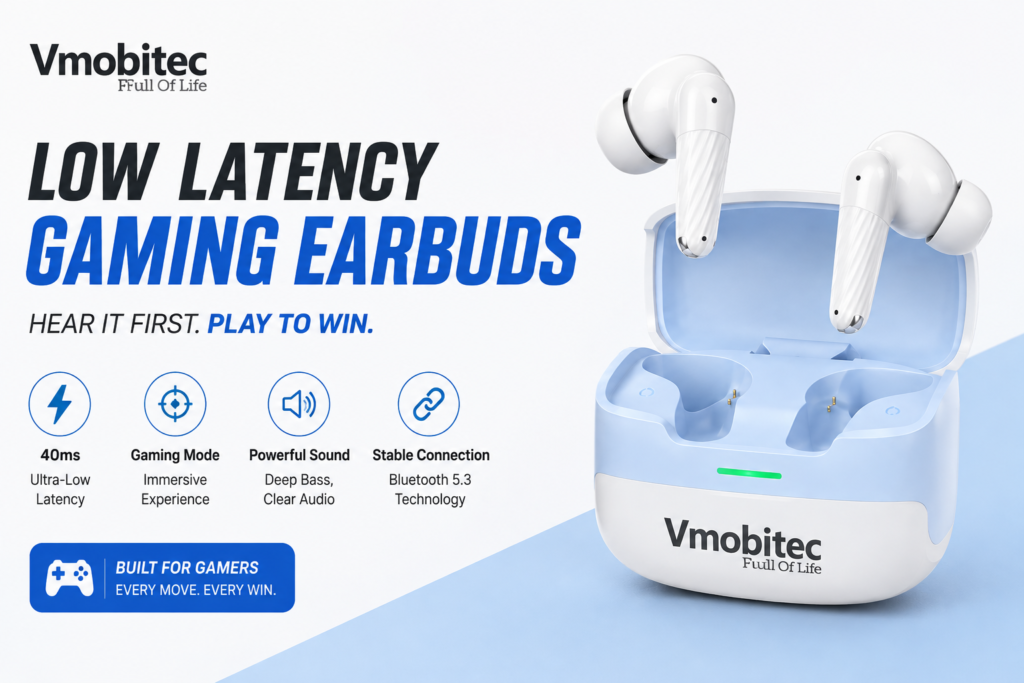
For mobile gaming, low latency and stable connectivity matter more than whether the device is a neckband or earbuds.
Gamers should look for products that specifically mention low-latency or gaming modes.
The physical design can influence comfort during extended gaming sessions. Some players prefer the secure feel of a neckband, while others prefer the unrestricted design of TWS earbuds.
Soundstage, microphone quality and Bluetooth performance can also affect gaming experience.
How to Choose Between a Neckband and Earbuds
The easiest way to choose is to match the device to your main activity, wearing time and portability requirements.
- Identify your primary use: Decide whether you mainly need music, calls, workouts, gaming or commuting.
- Consider wearing time: Long sessions make comfort and battery life more important.
- Check the fit: Choose an ergonomic design that stays secure without excessive pressure.
- Compare call quality: Frequent callers should prioritize microphone performance.
- Check battery specifications: Consider both continuous playback and charging convenience.
- Look at durability: Check water and sweat resistance if you’ll use the device during workouts.
- Set a realistic budget: Compare useful features rather than specifications you won’t use.
- Consider storage: Decide whether you prefer a charging case or the simplicity of a neckband.
This approach prevents one common buying mistake: selecting a product because of its feature list instead of its suitability for everyday use.
What Features Should You Check Before Buying?
Daily-use audio products should be evaluated across comfort, battery, connectivity, calls and durability rather than sound quality alone.
Battery Life
Look at both advertised playback time and charging requirements. TWS buyers should consider the combined battery provided by the earbuds and charging case.
Bluetooth Connectivity
Bluetooth version and connection stability can influence everyday convenience. Newer Bluetooth implementations can offer improvements, but the exact experience depends on the smartphone and audio device.
ENC and ANC
ENC generally refers to microphone-side environmental noise processing for clearer voice pickup. ANC is designed to reduce surrounding noise for the listener.
Don’t treat ENC and ANC as interchangeable technologies.
Water Resistance
For workouts, check the product’s IP rating and manufacturer guidance. Sweat exposure and water immersion are different use cases.
Controls
Physical buttons can be useful on neckbands, while TWS earbuds often use touch controls.
Choose the control system you can operate reliably without repeatedly reaching for your smartphone.
Why Vmobitec Users Should Compare More Than Design
VMobitec buyers should compare comfort, battery life, call performance, connectivity and intended use alongside the basic neckband or earbud design.
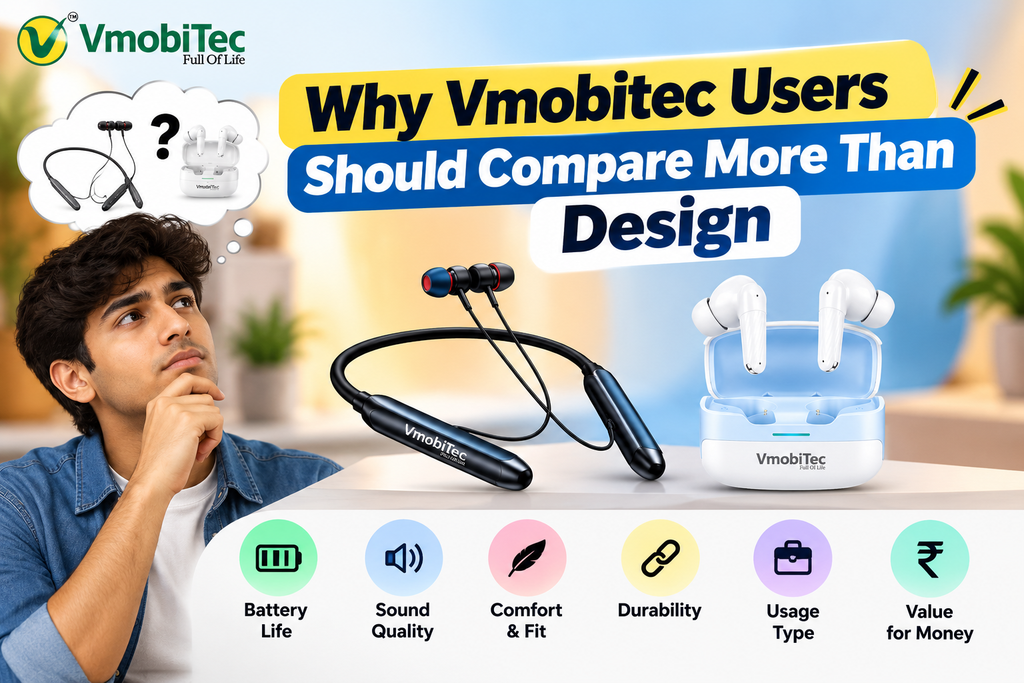
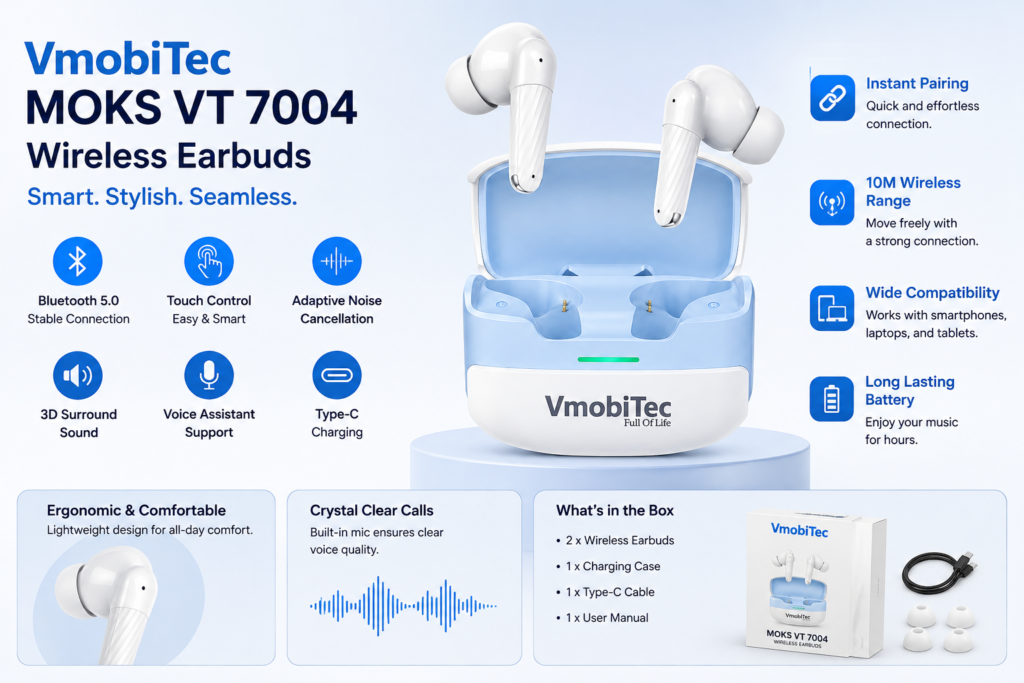
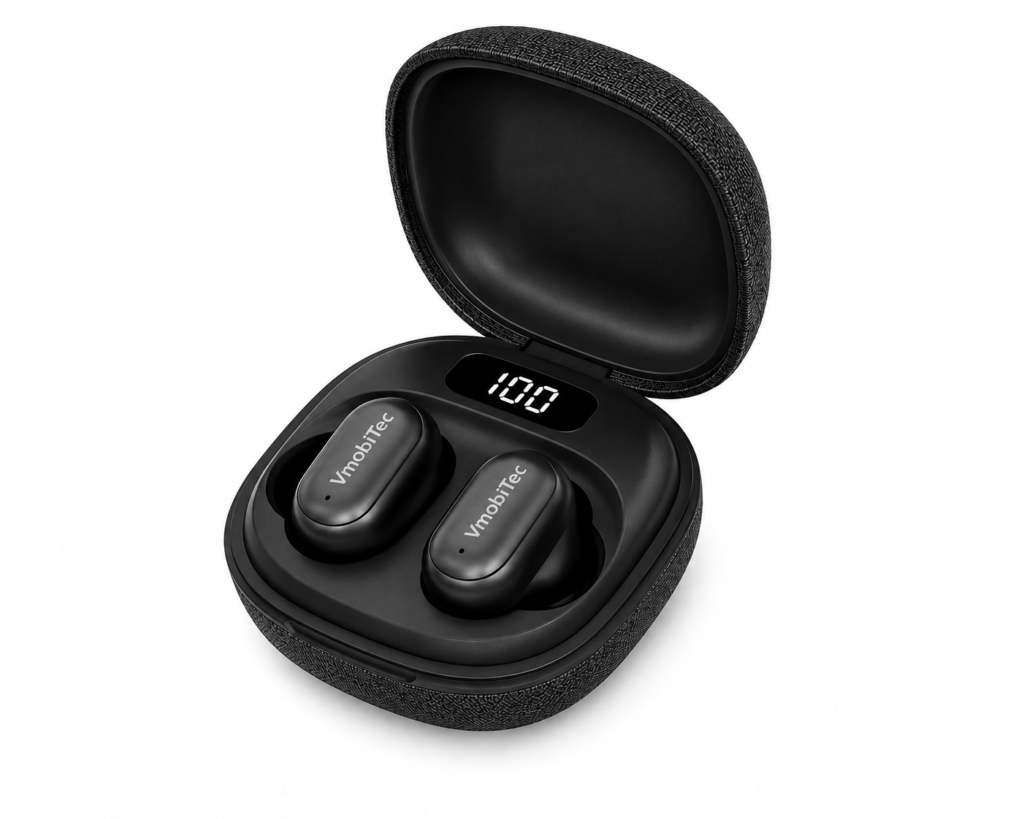
VMobitec offers mobile and electronic accessories for everyday smartphone users, including earbuds and neckbands. The right product depends on whether your priority is portability, calls, workouts, entertainment or extended listening.
A practical buying decision starts with your daily routine. Once the main use case is clear, specifications become much easier to compare.
For Indian consumers, price-to-feature value also matters. A good everyday audio product should provide the features you actually need without unnecessary extras.
Understanding Bluetooth Audio Technology
When comparing neckband vs earbuds which is better for daily use, it is also useful to understand how Bluetooth technology affects wireless audio performance. Factors such as Bluetooth version, connection stability, supported audio codecs, and device compatibility can influence the overall listening experience. For technical information about Bluetooth specifications and wireless connectivity, readers can refer to the official Bluetooth SIG resources for further details.
Frequently Asked Questions About Neckband vs Earbuds Which Is Better for Daily Use
Q: Neckband vs earbuds which is better for daily use?
A: Earbuds are generally better for users who prioritize compact size, portability and a completely wireless experience. Neckbands can be better for users who want easy handling, strong battery life and reduced risk of losing an earbud. For daily use, comfort and intended activity should determine the choice rather than the design alone.
Q: Are neckbands more comfortable than earbuds?
A: Comfort depends on ear shape, product weight, fit and personal preference. Neckbands can feel stable because the connecting band distributes some components around the neck. Earbuds may feel lighter and less restrictive, but the wrong ear-tip size can cause discomfort during long listening sessions.
Q: Do earbuds have better sound quality than neckbands?
A: Not necessarily. Sound quality depends on driver design, tuning, Bluetooth codecs, ear-tip fit and audio processing. A well-designed neckband can outperform a poorly tuned pair of earbuds. Buyers should compare actual audio performance, comfort and fit rather than assuming one form factor automatically sounds better.
Q: Which is better for calls, neckband or earbuds?
A: Both can provide good call quality when equipped with capable microphones and effective voice-processing technology. Neckbands may position microphones conveniently, while TWS earbuds can use multiple microphones on each earbud. Frequent callers should prioritize microphone quality, environmental noise reduction and real-world call clarity.
Q: Are neckbands better for workouts?
A: Neckbands can be practical for workouts because the connected earbuds are harder to lose during movement. TWS earbuds can feel less restrictive because there is no neckband. The best option depends on fit, sweat resistance, stability and personal preference. Always check the manufacturer’s water-resistance guidance before exercising with either type.
Q: Are wireless earbuds better for travel?
A: TWS earbuds are usually easier to carry because the earbuds and charging case form a compact package. Neckbands can still be convenient for travel because they can remain around your neck between listening sessions. Frequent travelers should compare battery life, comfort, noise isolation and charging convenience before choosing.
Q: Which is better for students, neckband or TWS earbuds?
A: Students can choose either format depending on their routine. TWS earbuds are convenient for carrying between classes, study areas and public transport. Neckbands can be easier to manage when frequently removing and wearing the earphones. Battery life, comfort, microphone quality and budget are useful deciding factors.
Q: Are neckbands cheaper than earbuds in India?
A: Neckbands are often available at competitive prices, while TWS earbuds span a wider range from budget to premium models. Neither category is universally cheaper. Compare battery life, sound quality, microphone performance, durability and features at the specific price point instead of choosing based only on product type.
Neckband vs Earbuds: Which Is Better for Daily Use ?
Neckbands and earbuds can both be excellent daily-use audio accessories, but they suit different priorities. Choose a neckband if easy handling, stability and extended listening are high on your list. Choose TWS earbuds if portability, compact storage and a completely wireless experience matter more.
For VMobitec customers, the smartest approach is to start with your daily routine and then compare battery, comfort, calls, connectivity, durability and price.
Browse VMobitec’s audio accessories and compare the specifications that matter for the way you actually listen