Blog
ANC vs ENC Difference: Which Technology Gives Better Call Quality?

ANC vs ENC Difference: What’s the Real Difference?
Confused about ANC vs ENC on your earbuds’ spec sheet? You’re not alone — most brands throw both acronyms on the box without explaining what they actually do. The ANC vs ENC difference comes down to one simple thing: ANC blocks noise from reaching your ears, ENC removes noise from reaching the other person’s ears on a call. Once you understand that split, picking the right earbuds gets a lot easier.
What Is ANC in Earbuds?
ANC (Active Noise Cancellation) is a hardware and software system that uses external microphones to capture ambient sound and generate an inverse sound wave, canceling that noise before it reaches your eardrum.
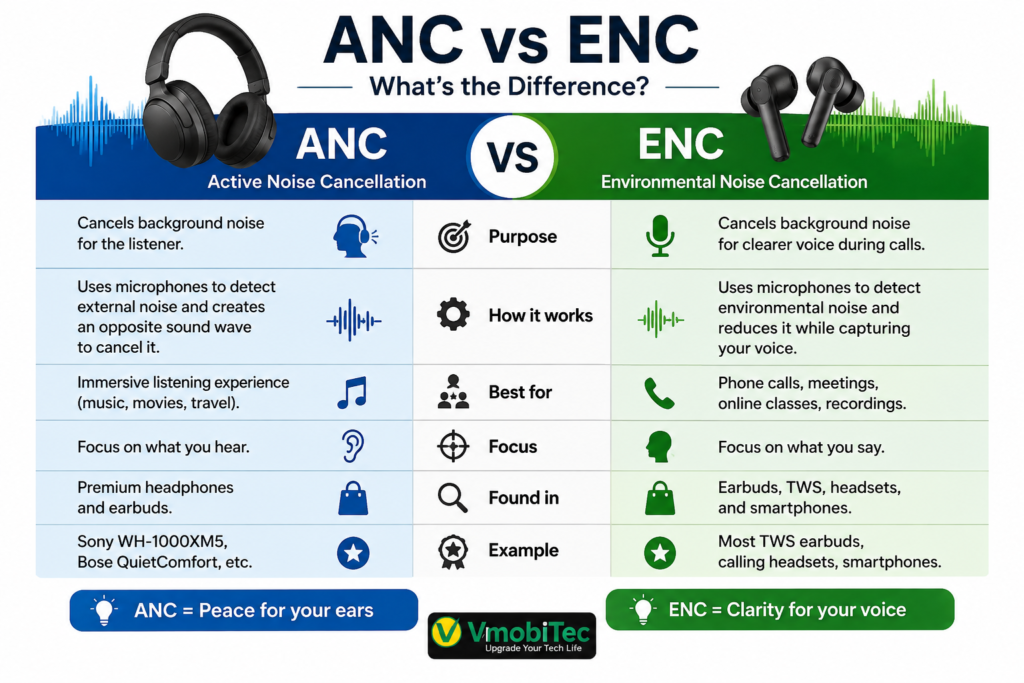
Every ANC earbud has at least one outward-facing microphone on the earbud shell. That mic picks up ambient sound — engine hum, air conditioning, chatter — and a dedicated chip generates an anti-noise waveform 180 degrees out of phase with it. When the two waves meet, they cancel each other out. That’s why ANC works best on constant, low-frequency sounds like airplane drone or traffic rumble, and struggles with sudden, high-frequency noise like a dog bark or a door slam.
How ANC Actually Works
ANC comes in three flavors, and the difference matters if you’re comparing specs:
- Feedforward ANC: Mic sits outside the earbud, catches noise before it enters the ear canal. Fast, but less precise.
- Feedback ANC: Mic sits inside the earbud, near your eardrum, and adjusts cancellation in real time. More accurate, but can introduce hiss.
- Hybrid ANC: Uses both feedforward and feedback mics. This is what you’ll find in premium earbuds like the Sony WF-1000XM5 or Bose QuietComfort Ultra, and it’s the gold standard for cancellation depth.
ANC is built for the listener. It’s the reason your commute suddenly gets quiet, or why a flight feels less exhausting.
What Is ENC in Earbuds?
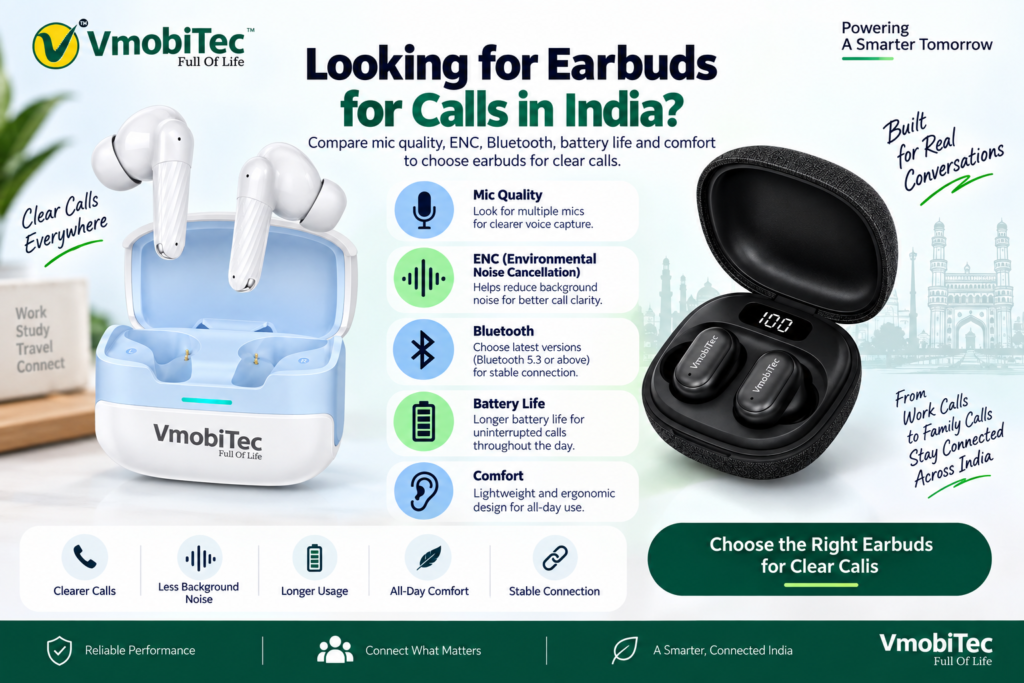
ENC (Environmental Noise Cancellation) is a microphone-based system that isolates your voice from background noise during calls, so the person on the other end hears you clearly instead of your surroundings.
ENC doesn’t touch what you hear at all. It only affects your outgoing voice signal. Most ENC setups use two or more microphones — one picks up your voice, another picks up ambient noise — and an algorithm (often AI-based) subtracts the noise from the voice signal before transmitting it over the call. This is the tech that lets you take a work call from a busy café without the other person hearing the espresso machine.
Why ENC Matters More Than People Think
In my experience testing earbuds for review, ENC quality varies far more between budget brands than ANC does. A ₹1,500 earbud can have surprisingly competent ENC because it’s mostly software-driven, while a strong ANC implementation needs precise mic tuning and a capable DSP chip, which usually means it’s reserved for pricier models.
ANC vs ENC: Core Difference at a Glance
ANC controls what you hear, ENC controls what others hear from you — they solve two completely different problems and often run simultaneously on the same pair of earbuds.
| Feature | ANC (Active Noise Cancellation) | ENC (Environmental Noise Cancellation) |
|---|---|---|
| Purpose | Blocks outside noise for the listener | Removes background noise from your voice on calls |
| Who benefits | You (the wearer) | The person you’re calling |
| Microphone use | Outward-facing mics cancel ambient sound in your ear | Multiple mics isolate voice from noise before transmission |
| Best for | Flights, commutes, focused music/work sessions | Calls, meetings, voice notes in noisy environments |
| Common in | Mid-range to premium earbuds (Sony, Bose, Apple, Nothing) | Almost all modern earbuds, including budget models |
| Battery impact | Higher drain due to constant real-time processing | Lower drain, mostly active only during calls |
| Works during music playback | Yes | No — only active when mic is in use |
Both features can and often do coexist on the same earbuds — one manages incoming sound, the other manages outgoing voice, so you’re rarely choosing just one over the other.
Which Is Better: ANC or ENC for Calls?
For calls specifically, ENC matters far more than ANC. ANC affects only what you hear through your earbuds — it has zero effect on how your voice sounds to whoever’s on the other end of the line. If your priority is clear, professional-sounding calls, prioritize earbuds with strong ENC and a good mic array over ANC depth.
That said, ANC isn’t useless on calls. Strong ANC keeps ambient noise from bleeding into your listening experience while you’re on a call, which matters if you’re in a loud environment and need to hear the other person clearly too. The ideal setup uses both: ANC keeps your side quiet, ENC keeps their side clean.
ANC vs ENC for Gaming
Gaming is where the two features pull in different directions. ANC can introduce a slight audio processing delay (latency) that competitive gamers notice, especially in fast-paced titles like FPS games where audio cues signal enemy footsteps or gunfire direction.
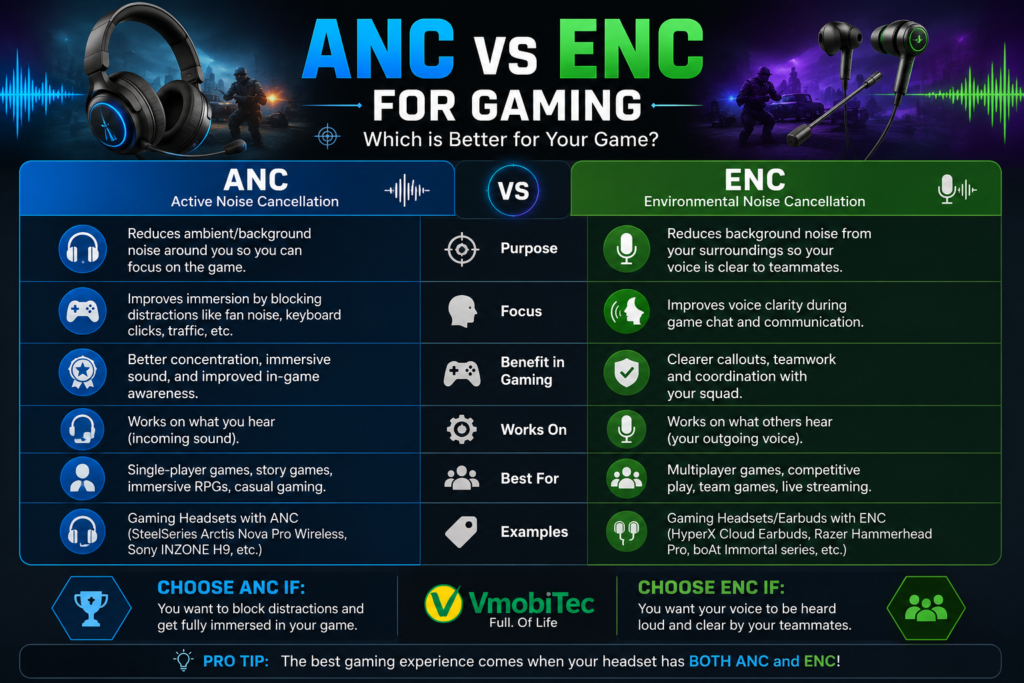
Many gaming-focused earbuds — think the Nothing Ear or OnePlus Buds Pro line in low-latency mode — actually reduce or bypass ANC processing to prioritize speed over silence. ENC, meanwhile, is genuinely useful for gaming, particularly for voice chat in multiplayer titles. It keeps your keyboard clacks, roommate noise, or AC hum out of your teammates’ ears without adding meaningful latency, since it only processes your outgoing mic signal.
Bottom line for gamers: ENC is close to a must-have for voice chat clarity, but check whether the earbud offers a dedicated low-latency mode that dials down ANC during gameplay.
ANC vs ENC for Office Use
Open offices are exactly the environment both features were built for, just in different directions. ANC helps you concentrate by dampening the low hum of HVAC systems, keyboard chatter, and distant conversations, which is why noise-cancelling earbuds have become common in hot-desk and co-working setups.
ENC becomes critical the moment you join a call from your desk. Nobody wants to hear your office’s ambient chatter on a client call, and strong ENC filters that out automatically without you needing to mute or find a quiet room every time.
For office use, look for earbuds that support ANC + ENC simultaneously — this is standard on mid-range and premium models from Sony, Samsung, Jabra, and Apple.
ANC vs ENC for Online Meetings
Online meetings are essentially an extended version of the calling use case, just with higher stakes and longer duration. ENC quality directly affects how professional you sound on a Zoom, Google Meet, or Teams call, while ANC affects your own comfort and focus during long meeting stretches.
- ENC priority: If you’re regularly the one speaking, presenting, or leading calls, ENC quality should be your top filter when shopping.
- ANC priority: If you mostly listen and need to block out a noisy home or office to stay focused, lean toward stronger ANC.
- Both matter equally if you’re in back-to-back calls all day, which is increasingly the norm in hybrid and remote roles.
Do I Need ANC or ENC Earbuds?
Here’s a direct answer: most people benefit from ENC more consistently day-to-day, but ANC delivers the bigger “wow” factor for travel and focus.
- [ENC]: If your earbuds are primarily for calls, meetings, or voice notes, ENC is non-negotiable. Skip earbuds without it.
- [ANC]: If you commute, fly frequently, or work in loud shared spaces and need to block sound out, ANC is worth paying extra for.
- [Both]: If you use earbuds for music, calls, and travel across your day, get a pair with both — this is standard on most mid-range earbuds priced above ₹2,000–3,000 in India.
Key Features to Check Before Buying
- Mic count: More mics generally mean better ENC performance — look for dual or triple-mic arrays per earbud.
- ANC depth (dB rating): Brands often list noise reduction in decibels (e.g., “up to 40dB”) — higher numbers mean deeper cancellation, though real-world results vary by ear fit.
- Transparency/Ambient mode: A good ANC earbud should let you toggle to ambient mode instantly for conversations without removing the earbud.
- Chipset: Qualcomm’s aptX and proprietary DSPs (like Sony’s Integrated Processor V2) tend to deliver more refined ANC and ENC than generic budget chipsets.
- Battery life with ANC on: ANC drains battery faster — check the “ANC on” battery figure separately from the standard rating, since brands often advertise the higher, non-ANC number.
Best Earbuds With ANC Under ₹2,000
Budget ANC has improved significantly, though depth of cancellation is noticeably shallower than premium models. In this price bracket, expect decent noise reduction for steady sounds like fans and traffic, but not the deep cancellation you’d get from flagship earbuds. Brands like boAt, Noise, and Realme regularly ship ANC in this segment, and it’s worth checking recent reviews since firmware updates can meaningfully change ANC performance on these models.
Best ENC Earbuds for Calling
Since ENC is largely software and algorithm-driven, budget and mid-range earbuds can perform surprisingly well here. Look specifically for models advertising “AI ENC” or multi-mic call noise reduction, since this usually signals a more modern noise-isolation algorithm rather than a basic single-mic setup. Brands actively marketing this include OnePlus, boAt, and Noise in the budget-to-mid segment, and Samsung, Apple, and Sony at the premium end.
Frequently Asked Questions About ANC vs ENC
Q: What is the main ANC vs ENC difference?
A: ANC blocks outside noise from reaching your ears, improving what you hear. ENC removes background noise from your voice during calls, improving what others hear. They solve opposite sides of the same noise problem and often work together on the same earbuds.
Q: What is ANC in earbuds?
A: ANC (Active Noise Cancellation) uses outward-facing microphones to detect ambient sound and generate an opposing sound wave that cancels it out before it reaches your eardrum. It’s best for constant sounds like engine hum or AC noise.
Q: What is ENC in earbuds?
A: ENC (Environmental Noise Cancellation) uses multiple microphones to isolate your voice from background noise during calls, so the person you’re speaking with hears you clearly without your surroundings bleeding into the call.
Q: Which is better, ANC or ENC, for calls?
A: ENC matters more for calls since it directly affects how clear your voice sounds to the other person. ANC only affects what you hear, not what you transmit, so it has no impact on call clarity from the listener’s side.
Q: Can earbuds have both ANC and ENC?
A: Yes, and most mid-range and premium earbuds today include both. ANC manages incoming sound for the wearer while ENC manages outgoing voice clarity during calls — they run independently and don’t conflict with each other.
Q: Does ANC drain battery faster than ENC?
A: Yes. ANC runs continuously while active, processing ambient sound in real time, which draws noticeably more power. ENC only activates during calls or voice input, so its battery impact is much smaller across a full day of use.
Q: Do I need ANC or ENC earbuds for gaming?
A: ENC is more valuable for voice chat clarity in multiplayer games, while ANC can add latency that affects fast-paced titles. Many gaming earbuds offer a low-latency mode that reduces ANC processing during gameplay for this reason.
Q: Are ENC earbuds good enough for office calls without ANC?
A: Yes, ENC alone handles the core job of keeping your voice clear on calls. ANC adds personal listening comfort but isn’t required for the other person to hear you well — ENC is the feature doing that work.
Final Verdict: ANC vs ENC
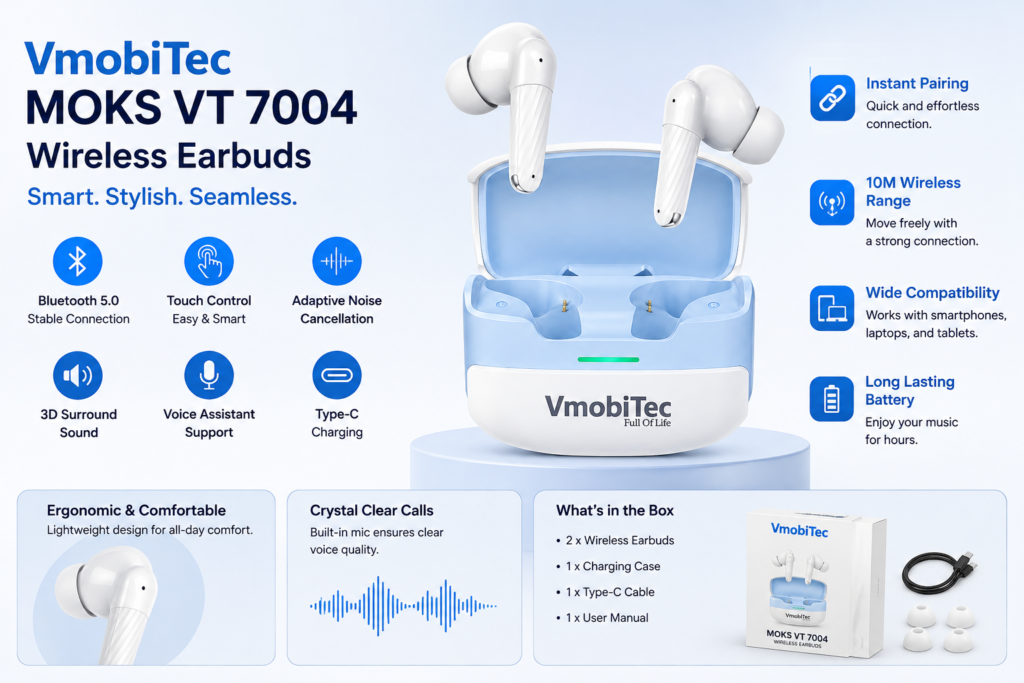
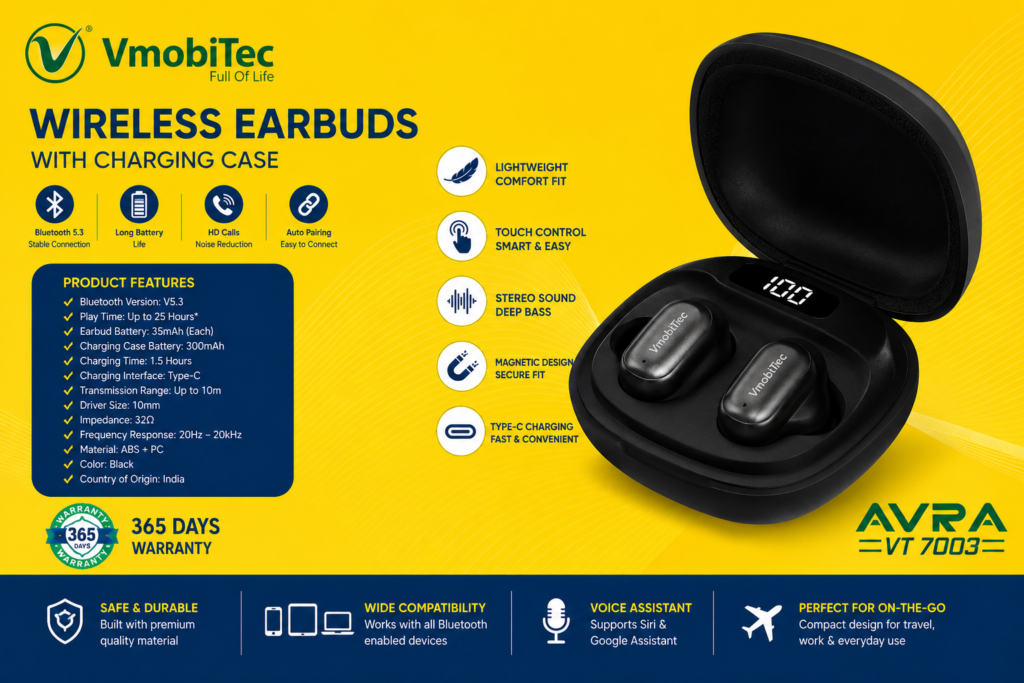
Neither feature replaces the other, so the real question isn’t which one wins, it’s which one your daily use actually needs. If calls and meetings dominate your day, ENC quality should top your buying checklist.at vmobitec we can find best earbuds Feature Do You Need If commuting, travel, or focus in loud environments matters more, prioritize ANC depth and check the dB rating. For most people juggling both work calls and daily commutes, earbuds with strong versions of both features are worth the extra spend over a single-feature pair.