Blog
How to Choose the Best Fast Charger for Android Phones


Best Fast Charger for Android Phones in 2026
If your Android phone still takes an hour and a half to hit 100%, the charger is almost always the problem — not the phone. Most people are still using the 10W brick that came in the box five years ago, or a generic USB-A adapter that can’t even talk to their device properly. In 2026, the right fast charger for Android needs to support GaN construction, USB PD 3.1, and PPS (Programmable Power Supply) — otherwise you’re leaving real charging speed on the table. This guide breaks down exactly what to buy, what to skip, and why compatibility matters more than raw wattage.
About This Guide
This guide was prepared by the VmobiTec Content Team, which researches and publishes practical buying guides for mobile accessories, including fast chargers, USB-C cables, power banks, wireless earbuds, and other smartphone essentials. Our goal is to help customers choose products that offer reliable performance, safety, and value.
Our research process: We compare official product specifications, charging standards, compatibility information, safety features, customer feedback, and manufacturer documentation before making recommendations. Where a product has not been independently tested by the VmobiTec team, we clearly rely on the manufacturer’s published specifications rather than claiming first-hand results.
What Is a Fast Charger for Android ?
A fast charger for Android is a power adapter built to deliver more voltage and current than the standard 5W USB brick, using protocols like USB-C Power Delivery (PD), PPS, or brand-specific systems such as OnePlus’s SuperVOOC or Xiaomi’s HyperCharge. Instead of pushing a fixed amount of power, modern chargers negotiate in real time with your phone and cable to find the fastest, safest charging rate.
This negotiation is the part most buyers miss. Plugging any 65W charger into a Samsung Galaxy phone doesn’t guarantee 65W of charging — if the charger doesn’t support PPS, the phone quietly falls back to a much slower rate. That’s why two chargers with identical wattage numbers on the box can charge the same phone at completely different speeds.
Why Android Charging Is More Complicated Than iPhone Charging
Apple’s ecosystem is simple: nearly every iPhone since the 12 uses standard USB-C PD, so almost any decent PD charger gets close to full speed. Android is fragmented by design. Samsung leans on PPS, OnePlus and Xiaomi push their own proprietary fast-charging standards well past 100W, and Google Pixel phones cap out at a comparatively modest 30W. Buying “a fast charger” without checking your specific phone’s protocol is the single most common mistake Android users make.
Benefits of Using a Fast Charger for Android
- Genuinely faster top-ups: A properly matched PPS or GaN charger can take many Android flagships from 0% to 50% in 20–30 minutes, instead of the 60–90 minutes a generic charger needs.
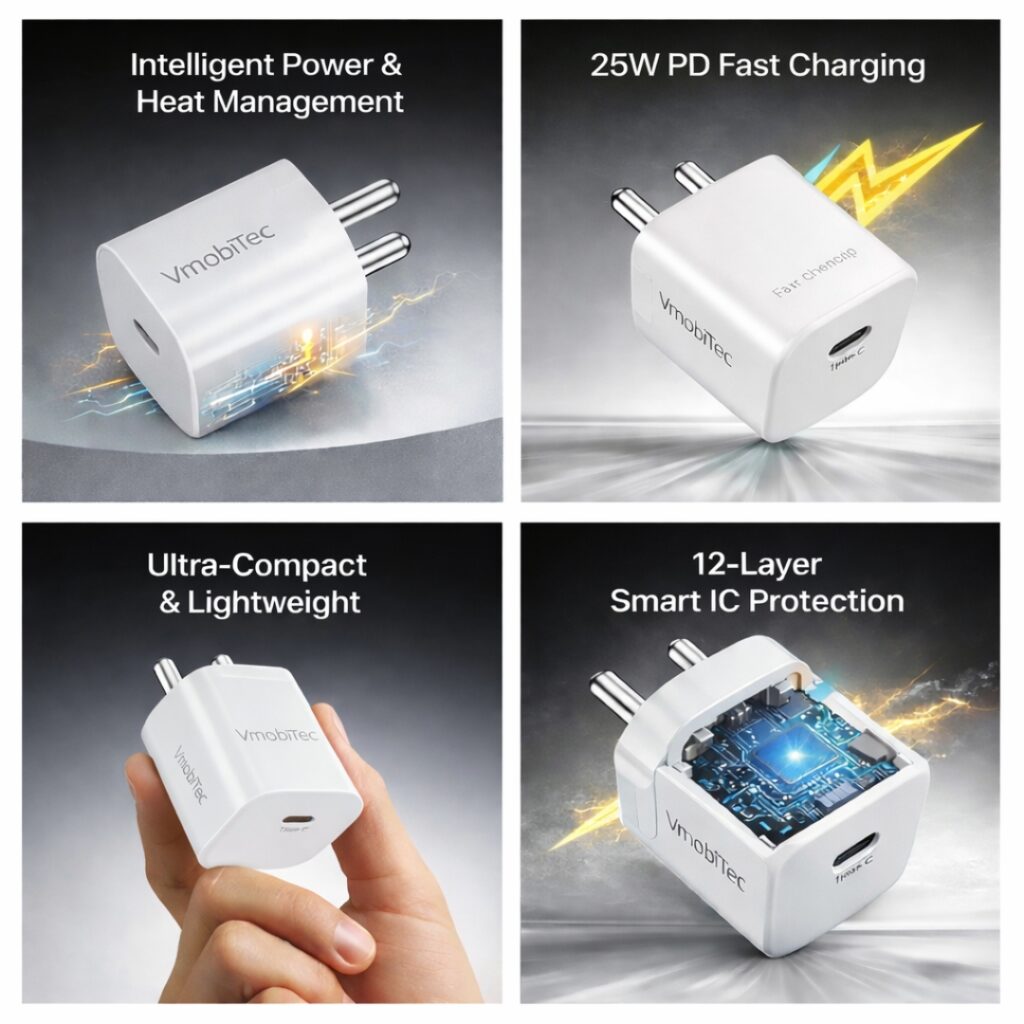
- Lower heat, longer battery life: PPS chargers adjust voltage dynamically, which cuts heat buildup during charging compared to older fixed-voltage PD chargers — and heat is the main long-term enemy of lithium-ion battery health.
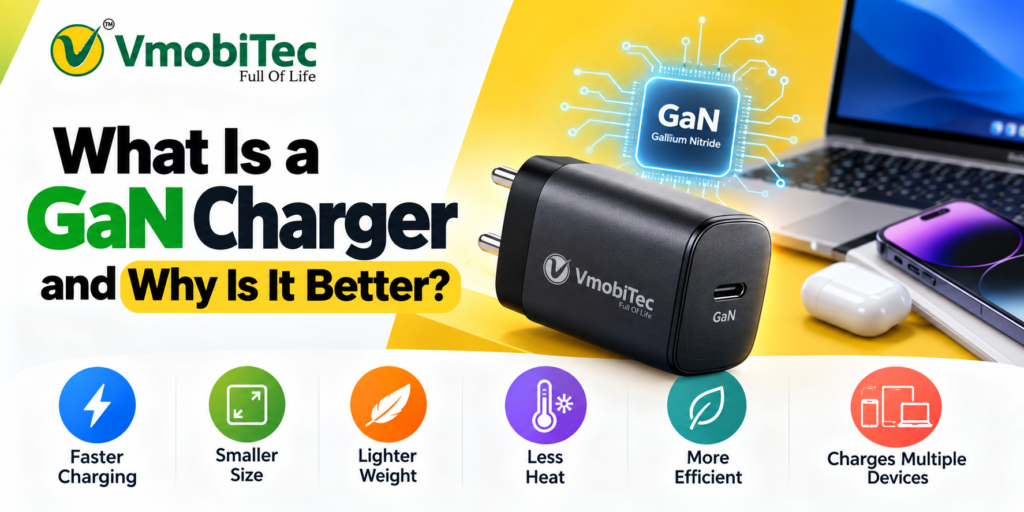
- Smaller, lighter travel gear: GaN (gallium nitride) chargers pack the same wattage into a case roughly a third the size of older silicon-based bricks, so a 65W charger can now fit in a jacket pocket.
- One charger for multiple devices: A single high-wattage GaN charger with 2–3 ports can often replace separate bricks for your phone, tablet, and even a laptop.
- Built-in safety monitoring: Better chargers actively track temperature thousands of times a day and cut power if something’s off, which matters when you’re charging overnight next to your bed.
Types of Fast Charger for Android
There isn’t one “fast charger” — there are several competing systems, and knowing which one your phone actually uses is the whole game.
USB PD (Power Delivery) and PPS
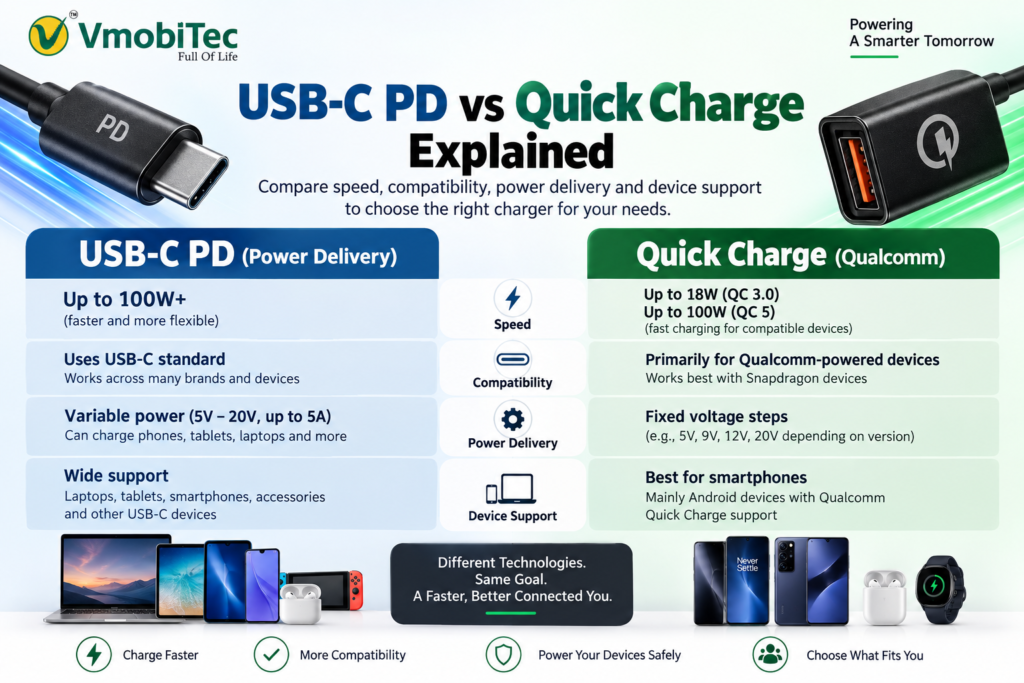
This is the universal, brand-agnostic standard almost every modern Android phone can accept at some level. Plain PD gives you fixed voltage steps; PPS layers on fine-grained, real-time voltage adjustment. Samsung’s Galaxy S24 and S25 series, along with recent Pixel phones, specifically require PPS to unlock their full rated wattage — a non-PPS 65W charger will not charge these phones at full speed even though the number on the box looks right.

GaN (Gallium Nitride) Chargers
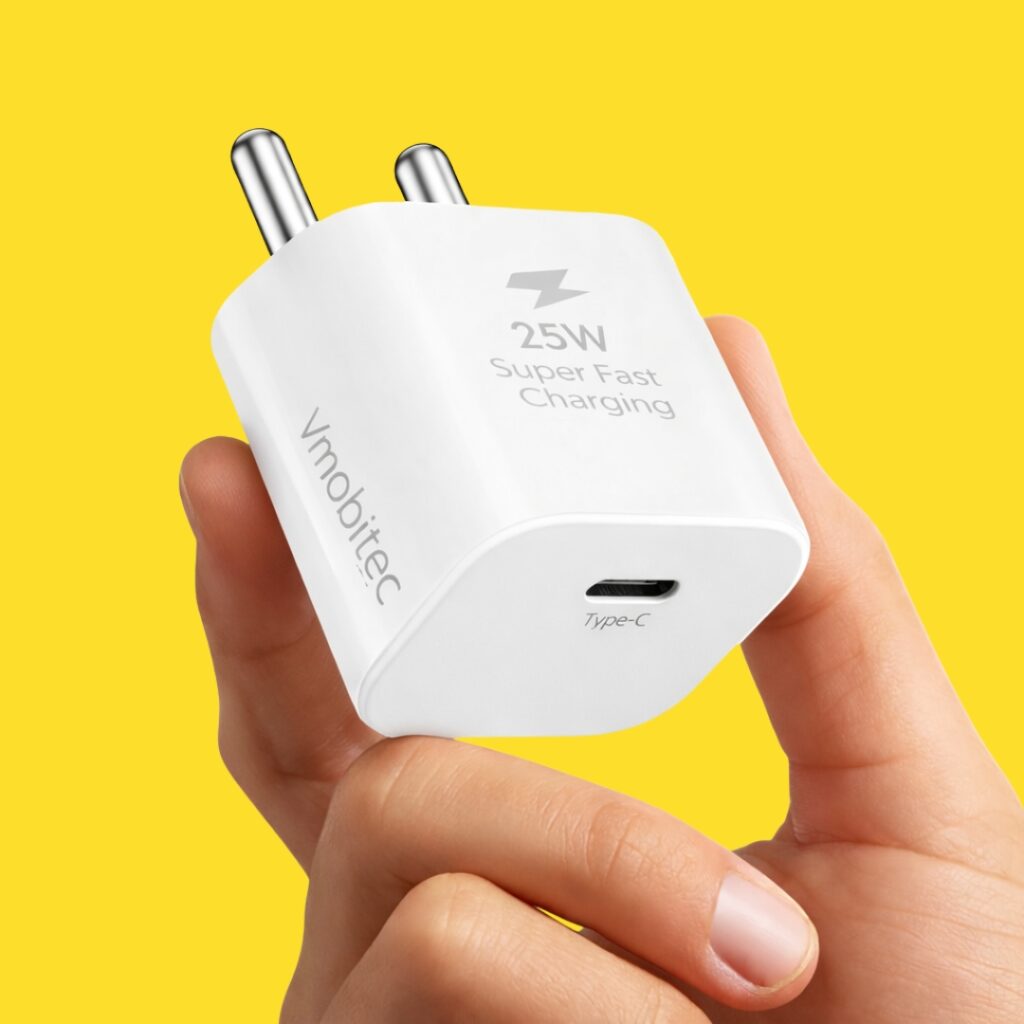
GaN isn’t a charging protocol — it’s the semiconductor material inside the charger. GaN chargers run cooler and more efficiently than older silicon designs, which is why nearly every well-reviewed charger released in 2026 uses it. Look for chargers that pair GaN construction with PD 3.1 and PPS support for the best combination of speed, size, and safety.
Proprietary Fast-Charging Standards
OnePlus’s SuperVOOC and Xiaomi’s HyperCharge use custom voltage and current profiles — sometimes as aggressive as 100W to 240W — that only work at full speed with the manufacturer’s own charger and cable. A OnePlus 12 on SuperVOOC, for example, can go from 0% to 100% in around 25 minutes, but only with the matching brick. A generic PD charger will still charge the phone — just noticeably slower.
Wireless Fast Charging (Qi2)
Qi2 has moved from niche to mainstream in 2026, bringing magnetic alignment and speeds up to 25W on newer flagships, compared to the 12–15W most older Android wireless chargers topped out at. It’s more convenient than wired charging but still slower, so it’s best treated as a supplement rather than a replacement for your main charger.
Comparison: Popular Fast Charger Options for Android (2026)
| Charger Type | Typical Wattage | Best For | Key Requirement |
|---|---|---|---|
| Universal PD + PPS GaN wall charger | 45W–67W | Samsung Galaxy, Pixel, most mid-rangers | Must explicitly list PPS support |
| High-wattage multi-port GaN charger | 100W–140W | Charging phone + laptop + earbuds together | Check per-port wattage, not just total |
| Brand proprietary charger (SuperVOOC/HyperCharge) | 80W–240W | OnePlus, Xiaomi, Realme flagships | Only hits full speed with matching brand cable |
| Compact single-port GaN charger | 20W–30W | Backup charger, bag, or bedside table | Fine for daily top-ups, not ideal for near-empty batteries |
| Qi2 wireless pad | Up to 25W | Desk charging, magnetic convenience | Phone must support Qi2, not just Qi |
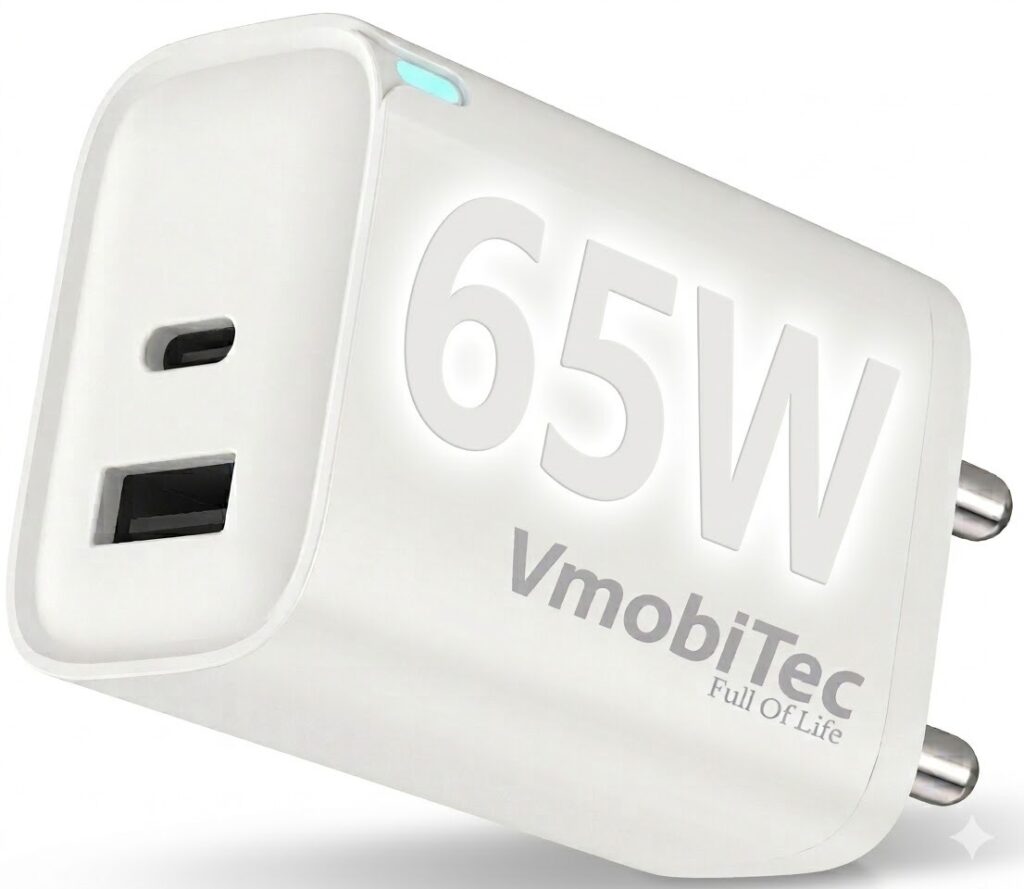
For most Android users, a 65W GaN charger with verified PPS support is the sweet spot — fast enough for nearly every phone on the market, small enough to travel with, and compatible enough not to need a second charger for guests or other devices.
How to Choose the Best Fast charger for Android
- Check your phone’s maximum supported wattage. Look this up for your exact model — Samsung Galaxy S25 Ultra tops out around 45W, Pixel phones are generally capped near 30W, while OnePlus and Xiaomi flagships can accept well over 100W.
- Confirm PPS support if you own a Samsung or Pixel device. If the product listing doesn’t mention PPS explicitly, assume it doesn’t have it.
- Match the cable, not just the charger. A high-wattage charger paired with a cheap, unrated cable will bottleneck your charging speed regardless of what the brick supports.
- Decide if you need multi-port charging. If you’re regularly charging a phone, tablet, and earbuds at once, a single 100W+ GaN charger with smart power distribution saves you carrying three separate bricks.
- Factor in portability. GaN designs under roughly 2.2 inches deep are the ones that actually disappear into a bag, rather than hogging a whole power strip.
- Look for real-time thermal monitoring. Chargers that display wattage or monitor temperature continuously are safer for regular overnight use.
Common Problems and Solutions
Problem: My “fast charger” isn’t actually charging fast. This almost always comes down to missing PPS support or an underrated cable. Double-check both before assuming the charger is defective.
Problem: PPS charging didn’t work until I updated my phone. Some Android phones need a software update to properly negotiate PPS with certain chargers — a known issue reported with older One UI builds on Galaxy devices. Update your phone’s software before troubleshooting the charger itself.
Problem: My multi-port charger slows down when I plug in two devices. This is expected behavior on shared-power designs — the charger is splitting its total wattage across ports. If you regularly charge two high-power devices simultaneously, look for a charger with independent, non-shared per-port wattage.
Problem: No international plug included. Several popular GaN chargers ship without regional plug adapters. If you travel internationally, check this before buying rather than after.
Why Choose VMOBITEC for Android Charging Accessories
At VMOBITEC, we test charging accessories against real Android flagships and mid-rangers — not just spec sheets — so our recommendations reflect actual charging speeds, heat behavior, and cable compatibility rather than marketing wattage numbers. Whether you need a single GaN brick for daily use or a multi-device charging setup for your whole household, our team can help you match the right charger to your exact phone model instead of guessing. Get in touch with VMOBITEC for a free consultation on the right fast-charging setup for your device.
Expert Tips
- Don’t buy on wattage alone — a 100W charger without PPS can charge a Samsung phone slower than a proper 45W PPS charger.
- Keep your original cable’s rating in mind; a 60W-rated cable will cap a 100W charger’s real-world output.
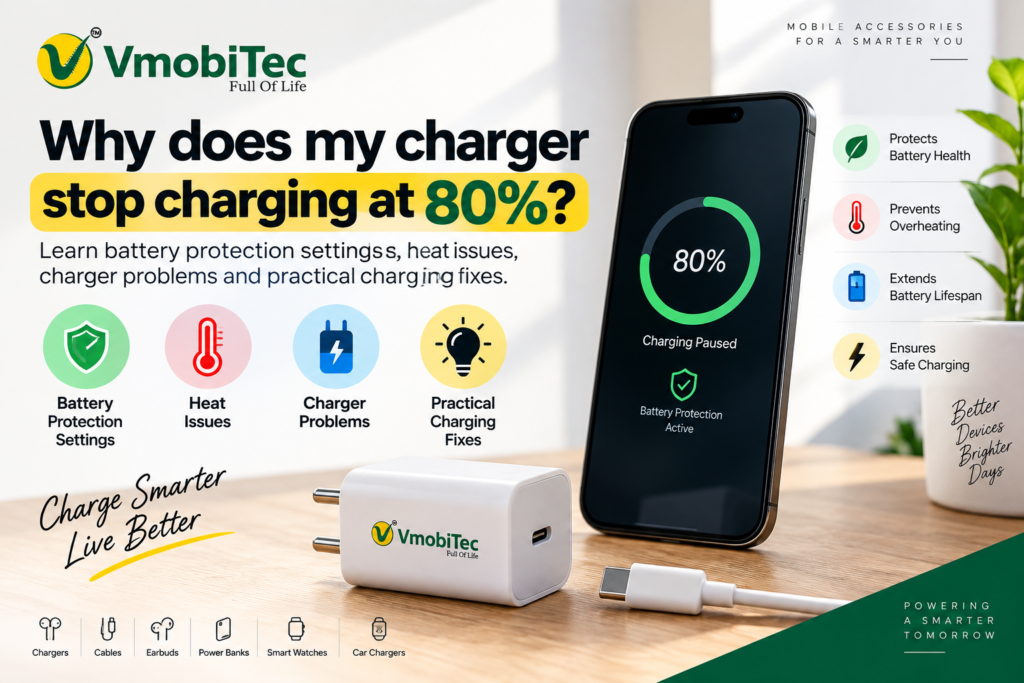
- Charging from 20% to 80% is consistently faster and gentler on the battery than chasing a full 0–100% cycle every time.
- If you own multiple Android brands in your household, a universal PD + PPS charger is more practical than chasing each brand’s proprietary brick.
Frequently Asked Questions About Fast Chargers for Android
Q: What wattage charger do I need for a Samsung Galaxy phone?
A: Samsung Galaxy S24 and S25 series phones need a 45W charger with PPS support to reach their maximum charging speed. Without PPS, the phone falls back to a slower charging rate.
Q: What is the maximum charging speed for a Google Pixel phone?
A: Most recent Google Pixel phones support charging at up to around 30W. Using a charger with a higher wattage won’t make it charge any faster. A 30W USB-C PD charger is sufficient.
Q: How fast does OnePlus SuperVOOC charge a phone?
A: With the official SuperVOOC charger and cable, compatible OnePlus phones can charge from 0% to 100% in around 25 minutes. Third-party USB-C PD chargers will charge the phone, but at a slower speed.
Q: What is PPS charging, and why does it matter for Android?
A: PPS (Programmable Power Supply) dynamically adjusts voltage and current for efficient charging. Samsung and Google Pixel phones require PPS to achieve their maximum charging speeds.
Q: Is a GaN charger worth it for an Android phone?
A: Yes. GaN chargers are smaller, more efficient, and generate less heat than traditional chargers while delivering high power output.
Q: Can an iPhone charger fast charge an Android phone?
A: Yes, but at a reduced speed. A standard 20W Apple USB-C charger will charge most Android phones safely but won’t reach the 45W or higher speeds supported by many Android devices.
Q: Will using a higher-wattage charger damage my phone’s battery?
A: No. Modern smartphones automatically negotiate the correct charging power, so a 100W or 140W charger will only supply the power your phone can safely accept.
Q: What’s the difference between wired charging and Qi2 wireless charging?
A: Wired charging is still the fastest option. Qi2 wireless charging offers improved efficiency and can deliver up to 25W on supported devices with magnetic alignment.
Q: Can one charger fast charge a phone, tablet, and laptop at the same time?
A: Yes. A high-quality multi-port GaN charger can charge multiple devices simultaneously, although the total output is shared across the connected ports.
Q: Why does my charger say 65W, but my phone isn’t charging that fast?
A: This is usually caused by a compatibility issue. If the charger doesn’t support PPS or the cable isn’t rated for high-power charging, fast charger for Android the phone will reduce charging speed for safety.
Conclusion: Finding the Best Fast Charger for Android
Choosing the right fast charger for Android comes down to matching your phone’s protocol, not chasing the highest wattage number on the box. A GaN-based fast charger with PD 3.1 and PPS support covers most Samsung, Pixel, and mid-range devices, while OnePlus and Xiaomi owners get better results sticking with their brand’s proprietary fast charger. Whatever your phone, pairing the right fast charger for Android with a properly rated cable is what actually delivers faster, safer charging — not the sticker on the adapter. Reach out to VMOBITEC to find the exact fast charger that fits your phone and charging habits.