Blog
Best Wireless Earbuds Under ₹1500 That You’ll Love

Earbuds with Deep Bass: What Actually Delivers Powerful Sound
Most earbuds marketed as “bass boosted” rely on software EQ presets rather than hardware built for low-frequency output — and the difference is obvious the moment you play a track with a real sub-bass line. Earbuds with deep bass depend on driver size, chamber design, and tuning working together, not just a marketing sticker. In my experience testing budget and mid-range earbuds across price tiers, the ones that actually deliver heavy bass sound share a few specific traits that have nothing to do with price alone. Here’s what separates genuinely bass-forward earbuds from ones that just claim to be.
What Makes Earbuds Have Deep Bass?
Earbuds with deep bass typically use larger dynamic drivers — usually 10mm to 13mm — combined with a sealed acoustic chamber and a tuning profile that emphasizes low-end frequencies without distorting at higher volumes. Driver size alone doesn’t guarantee bass quality; the seal created by ear tips matters just as much.
A driver pushes air to create sound, and bass frequencies need more air movement than mids or highs to feel physically present. That’s why larger drivers generally handle deep bass sound better than smaller ones, though a poorly sealed ear tip can undercut even a well-built driver by letting low frequencies leak out before they reach your eardrum.
Why Ear Tip Fit Matters More Than Buyers Expect
A loose or wrong-sized ear tip is the single most common reason bass-marketed earbuds sound thin in real use. Bass frequencies are the first thing to disappear when a seal breaks, which is why manufacturers of powerful bass earbuds typically include multiple silicone tip sizes in the box.
If your current earbuds sound like they’re missing bass compared to the demo you heard in-store, check the fit before blaming the hardware. Industry data from audio engineering circles consistently points to seal quality as a bigger real-world factor than driver spec sheets alone.
Best Earbuds with Deep Bass: What to Look For
Look for a stated driver size of 10mm or larger, a closed or semi-open acoustic design, and an EQ profile described as “bass boosted” or “extra bass” rather than a flat reference tuning built for studio monitoring.
Bluetooth earbuds with deep bass generally fall into three tuning categories: bass-boosted consumer tuning, balanced/neutral tuning, and audiophile reference tuning. Bass-boosted models intentionally lift low frequencies for a punchier, more energetic sound — ideal for hip-hop, EDM, and pop. Neutral tuning preserves accuracy across the frequency range but won’t feel as physically powerful. Reference tuning is built for critical listening and typically undersells bass on purpose.
For most buyers searching specifically for deep bass, bass-boosted consumer tuning is the right category — not a neutral or reference-tuned pair marketed generically as “premium sound.”
Hi-Fi Audio and Rich Bass Aren’t Always the Same Thing
Hi-Fi audio claims focus on overall fidelity and frequency accuracy, while rich bass audio specifically describes how full and textured low frequencies sound. A pair can be genuinely Hi-Fi without emphasizing bass, and a bass-heavy pair isn’t automatically Hi-Fi. If deep bass is your priority, look for bass-specific language in the product description rather than general Hi-Fi claims alone.
Comparison: Deep Bass Earbuds by Budget Tier
| Tier | Price Range (India) | Typical Driver Size | Bass Character | Best For |
|---|---|---|---|---|
| Budget | Under ₹1,000 | 10–12mm | Punchy, less controlled at high volume | Casual listening, gym use |
| Mid-Range | ₹1,000–₹2,000 | 11–13mm | Deeper, better controlled | Daily use, music-focused listeners |
| Premium | ₹2,000–₹4,000 | 12–13mm + tuning software | Deep, textured, less distortion | Bass enthusiasts, EDM/hip-hop fans |
Affordable earbuds with deep bass under ₹1,000 can still deliver satisfying low-end punch, but they typically start distorting at higher volumes where mid-range and premium models hold their tuning steady. If budget is a hard constraint, prioritize a model with a stated driver size over one that only lists “extra bass” as a marketing term with no spec behind it.
Key Features That Matter for Powerful Bass Earbuds
- Large dynamic drivers (10mm+): Bigger drivers move more air, which is the physical basis for deep, felt bass rather than just audible bass.
- Sealed-fit ear tips in multiple sizes: A proper seal prevents low-frequency leakage, which has more real-world impact on bass than driver spec alone.
- Bass-boost EQ modes: Many Bluetooth earbuds include a companion app or physical button toggle for a dedicated bass-enhanced sound profile.
- Vented driver housing: Some designs use a small acoustic vent to reduce distortion at high bass volumes, improving clarity during heavy bass passages.
- HD stereo sound separation: Clear channel separation keeps bass from muddying vocals and mids, which matters as much as raw bass power for overall listening quality.
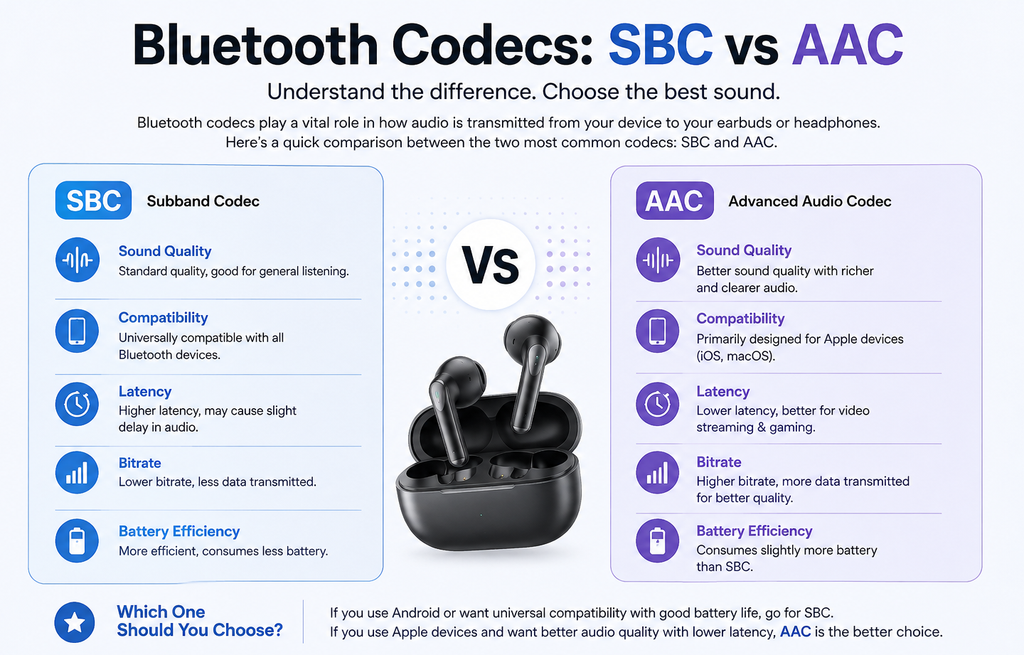
- Stable Bluetooth codec support: Codecs like AAC or aptX reduce compression artifacts, preserving low-frequency detail better than basic SBC-only earbuds.
How to Choose Earbuds with Deep Bass
- Check the driver size in the spec sheet. 10mm or larger is the baseline for buyers specifically prioritizing bass over general sound balance.
- Confirm the tuning profile is bass-boosted, not neutral. Product listings that mention “extra bass,” “heavy bass,” or “bass boost” mode are targeting this specifically.
- Test the ear tip seal before judging bass quality. Try the included tip sizes and pick the one that blocks the most outside noise — that’s usually the correct seal for full bass response.
- Match your budget tier to realistic expectations. Under ₹1,000 gets you punchy but less controlled bass; ₹1,000–₹2,000 typically adds better distortion control at volume.
- Look for companion app EQ if you want flexibility. Adjustable bass levels let you dial in intensity per genre rather than committing to a single fixed tuning.
Frequently Asked Questions About Earbuds with Deep Bass
Q: Which earbuds are best for deep bass?
A: The best earbuds with deep bass use 10mm or larger drivers with a bass-boosted tuning profile and a proper ear tip seal. Mid-range options in the ₹1,000–₹2,000 range typically balance strong bass output with better distortion control than budget models under ₹1,000.
Q: Are bass-boosted earbuds worth it?
A: Yes, if you primarily listen to bass-heavy genres like hip-hop, EDM, or pop. Bass-boosted tuning trades some frequency accuracy for a punchier, more energetic sound, which suits casual listening better than critical or studio-style listening.
Q: What driver size is best for deep bass in earbuds?
A: A driver size of 10mm to 13mm generally produces the deepest, most physically present bass in earbuds. Larger drivers move more air, which is the core mechanism behind heavy bass sound, though ear tip seal quality affects the final result just as much.
Q: Can affordable earbuds under ₹1,000 have good deep bass?
A: Yes, several budget models under ₹1,000 include 10mm+ drivers and bass-boosted tuning. The tradeoff is usually distortion control at higher volumes, which tends to improve as you move into the ₹1,000–₹2,000 range.
Q: Do earbuds with deep bass sacrifice vocal clarity?
A: Not necessarily, though poorly tuned bass-boosted earbuds can muddy vocals if the low-end isn’t balanced against the mids. Look for listings that mention HD stereo sound or clear channel separation alongside bass-boost claims to avoid this tradeoff.
Q: Is Bluetooth 5.0 enough for bass-heavy audio streaming?
A: Yes, Bluetooth 5.0 and newer versions comfortably support codecs capable of preserving bass detail during streaming. Codec support (like AAC or aptX) matters more for audio quality at this stage than the Bluetooth version number alone.
Final Verdict: Choosing Earbuds
The earbuds that genuinely deliver deep bass combine a driver size of 10mm or larger with intentional bass-boosted tuning and a proper ear tip seal — not just marketing language on the box. Whether you’re shopping under ₹1,000 or up to ₹2,000, checking the spec sheet for driver size and tuning profile will tell you more than the product photos or generic “powerful sound” claims ever will. If bass-heavy genres are your main use case, prioritize bass-specific tuning over general Hi-Fi claims when comparing options.